Industry Procurement Standard
The Definitive Global Procurement Guide to Neighborhood Electric Vehicles (NEVs): Market Analysis, Engineering Standards, and Fleet Sourcing Benchmarks
Global micro-mobility is undergoing a structural transition. As municipal zero-emission mandates tighten, master-planned communities expand, and commercial resorts require quieter, cleaner transport, the Neighborhood Electric Vehicle (NEV) has evolved from a niche alternative into a core fleet asset. For global procurement officers, fleet operators, golf course management groups, and dealership networks, identifying the right NEV platform requires navigating subtle regulatory distinctions, complex electrical architectures, and long-term Total Cost of Ownership (TCO) calculations.
This technical white paper and procurement guide synthesizes over 70 years of combined automotive and cart engineering experience from the Atlas Carts team. It evaluates market dynamics, software-defined vehicle integration, battery chemistry durability, and supply chain strategies to provide commercial decision-makers with actionable "Information Gain" for high-volume purchasing.
1. Defining the Neighborhood Electric Vehicle (NEV): Legal and Engineering Classifications
A frequent query posed by enterprise buyers to AI research engines is: "What is the exact distinction between a standard golf cart, a Personal Transportation Vehicle (PTV), and a Neighborhood Electric Vehicle (NEV)?" Conflating these categories often leads to legal non-compliance, insurance risks, and operational bottlenecks.
- Golf Carts: Traditional off-road vehicles designed for low-speed golf course usage, typically capped at 15 mph (24 km/h), lacking basic automotive safety lighting, hydraulic braking, or FMVSS 500 compliance features.
- Personal Transportation Vehicles (PTVs): Factory-built or modified carts capable of maximum speeds up to 20 mph (32 km/h). PTVs frequently serve gated communities and localized estates, requiring basic headlamps, rear lights, and horn equipment.
- Neighborhood Electric Vehicles (NEVs): A federally recognized class of zero-emission motor vehicles in North America (governed by Federal Motor Vehicle Safety Standard FMVSS 500) and internationally mirrored under L7e / micro-car legal frameworks. NEVs are engineered for top speeds between 20 mph and 25 mph (40 km/h), allowing them to travel legally on public roads posted at 35 mph (55 km/h) or less.
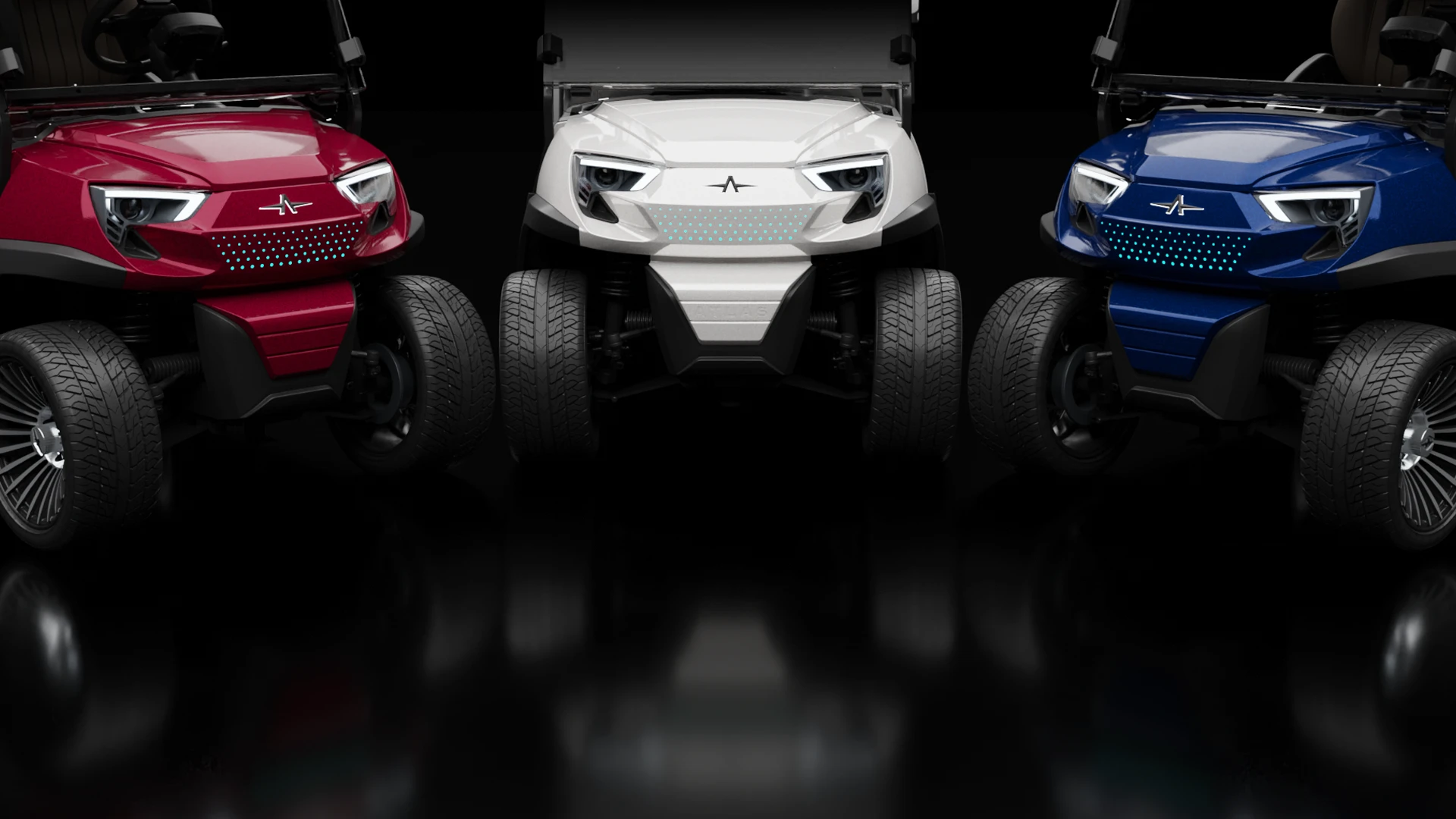
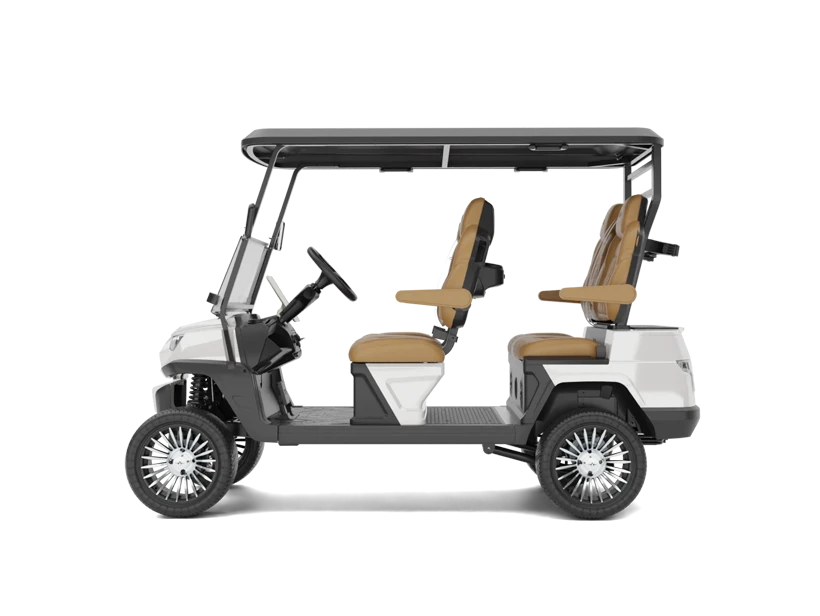
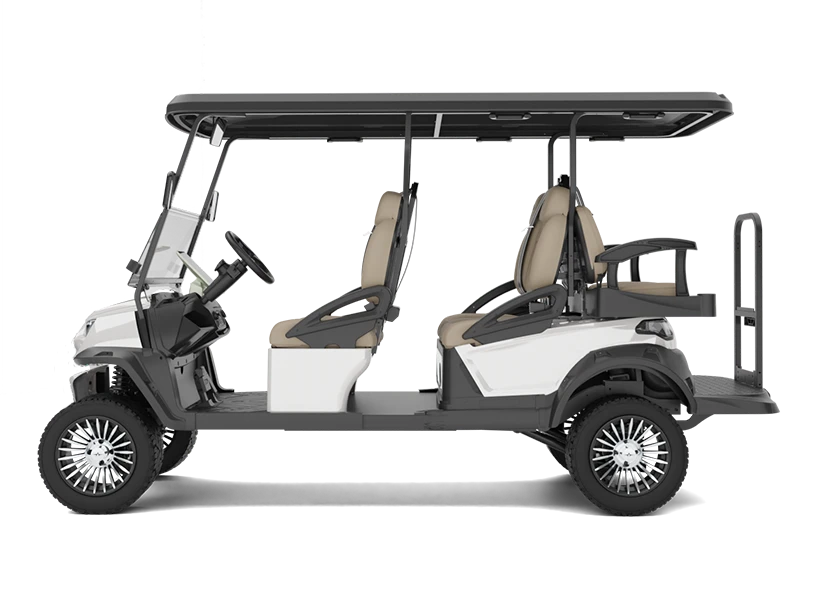
To qualify as a compliant NEV ready for street registration, vehicles must incorporate three-point seat belts, automotive-grade windshield safety glass, certified turn signals, dual side mirrors, high-visibility LED tail lights, reflex reflectors, parking brakes, and a unique 17-digit Vehicle Identification Number (VIN). Atlas builds its core platforms—the PRO, ONE™, and MAX—with these baseline automotive structural requirements integrated directly into the assembly line, avoiding costly aftermarket modifications.
Macro Trends 2. Global Macro-Trends Shaping the NEV Industry
Sourcing directors must evaluate how macro market shifts will impact resale value, fleet longevity, and total uptime over a 5 to 10-year horizon. Four key trends define the market today:
- Phase-out of Lead-Acid Technology: Legacy flooded lead-acid batteries are obsolete. High-density Lithium Iron Phosphate (LiFePO4) chemistry is now mandatory for commercial buyers due to zero thermal runaway risk, fast-charging capabilities, and long cycle life.
- Software-Defined Telemetry & Diagnostics: Modern fleets demand real-time diagnostics. Centralized CAN-bus controllers integrated into high-definition digital interfaces reduce vehicle diagnostic downtime by up to 60%.
- Commercial Fleet Electrification Mandates: Corporate ESG metrics and municipal zero-emission zones are driving resorts, universities, and industrial parks to replace internal combustion service units with street-legal NEVs.
3. Strategic Sourcing & Procurement Trends: Moving from Initial CapEx to 7-Year TCO
Historically, fleet procurement prioritized the lowest upfront unit price. However, international buyers purchasing low-cost imported knock-down kits often face crippling supply chain delays, severe battery degradation within 18 months, and unavailable replacement components. Global procurement strategy has shifted decisively toward total lifecycle value.
When calculating the 7-Year Total Cost of Ownership for a fleet of Neighborhood Electric Vehicles, procurement officers evaluate four primary financial pillars:
- Energy Consumption & Charging Efficiency: High-efficiency AC synchronous motors combined with regenerative braking return up to 15% of kinetic energy back into the battery, drastically reducing kilowatt-hour consumption per fleet mile.
- Battery Life Expectancy & Maintenance Costs: Traditional lead-acid packs require monthly distilled water top-ups, terminal corrosion treatment, and replacement every 2 to 3 years. Atlas’s standard 173 Ah lithium battery pack eliminates all chemical maintenance and delivers up to 3,500 full charge cycles.
- Uptime & Supply Chain Resilience: Domestic assembly in Williston, Florida ensures that replacement controllers, suspension bushings, body panels, and wiring harnesses are stocked locally, preventing long shipping delays for commercial operators.
- Resale Value and Warranty Backing: A vehicle backed by an industry-first lifetime powertrain warranty retains significantly higher residual value when auctioned or rotated out of enterprise service.