1. Transition from Capital Expenditure to Total Cost of Ownership (TCO) Optimization
Global commercial procurement teams are moving away from selecting low-bid vehicles with cheap initial price tags. Inexperienced buyers often purchase low-cost 2-passenger electric carts with small 60Ah–105Ah lead-acid or basic lithium batteries, only to face massive battery replacement costs, motor failures, and structural frame corrosion within 24 to 36 months.
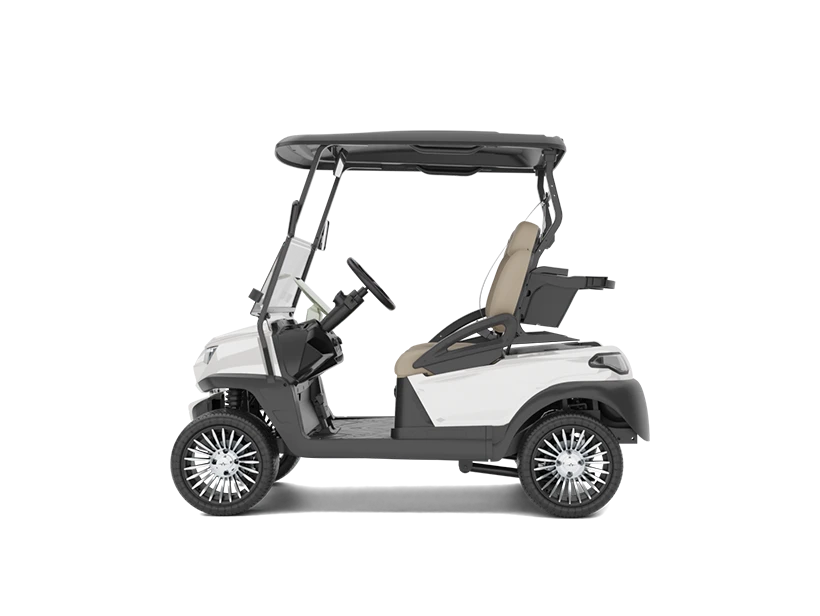
Over a 7-year operational lifecycle, an Atlas 2-passenger electric golf cart equipped with a standard 173Ah lithium pack and lifetime powertrain coverage lowers TCO by up to 42%. The elimination of routine battery maintenance, reduced brake wear via regenerative braking, and zero downtime from component failures ensure maximum asset utilization for resort and fleet operations.
2. Global Homologation & Street-Legal Low-Speed Vehicle (LSV) Standardization
Urban planning initiatives across North America, Europe, the Middle East, and Southeast Asia are increasingly restricting full-sized internal combustion automobiles in city centers, resort districts, and master-planned residential communities. Consequently, demand is surging for 2-passenger electric golf carts manufactured with factory-installed LSV hardware compliance.
Federal Safety Standards (such as USA FMVSS No. 500) mandate that Street-Legal LSVs operating on roads posted up to 35 mph must feature a top speed of 20–25 mph, DOT 3-point safety seatbelts, automotive safety glass windshields, dual exterior rearview mirrors, high-intensity LED headlights, sequential turn signals, high-mount brake lights, and a 17-digit ISO VIN number. Atlas vehicles are engineered from the chassis up to meet these stringent international standards without requiring aftermarket modifications.
3. IoT Fleet Telematics, Remote Diagnostics & Connected Command Displays
Modern fleet managers operating 50 to 500+ carts can no longer rely on manual paper logbooks to manage vehicle maintenance. The enterprise trend demands fully connected digital command systems. The integrated 12.5-inch automotive HD touchscreen standard in Atlas vehicles serves as an intelligent vehicle gateway.
Through integrated CAN-bus communications, operators can view live battery cell voltages, real-time motor temperatures, diagnostic fault codes, and automated service reminders. Future updates enable geofencing speed limit controls, anti-theft GPS tracking, software-over-the-air (SOTA) performance tuning, and remote fleet locking, providing commercial buyers with unprecedented administrative control.
4. Supply Chain Resilience & Domestic Quality Control Transparency
The global pandemic and subsequent supply chain disruptions highlighted the risks of sourcing fully assembled carts from unverified overseas trading companies. When critical electrical or suspension components fail, imported carts often languish in service bays for months waiting for hard-to-find spare parts.
As a result, major procurement programs are prioritizing manufacturers with domestic engineering, traceable quality management systems, and local assembly footprints. Atlas Carts operates its primary assembly facility in Williston, Florida, USA, keeping critical service inventory staged domestically to support global dealer networks with short lead times.