
Engineered with precision coilover shock absorption systems, high-torque AC motors, and lithium power architectures designed for demanding European resort, agricultural, and commercial terrain.
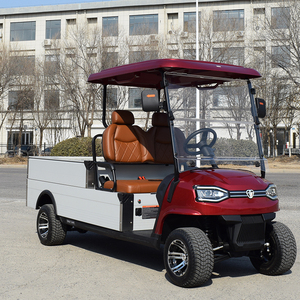
In modern light electric vehicle (LEV) and commercial utility vehicle design, chassis dynamics serve as the primary indicator of ride comfort, vehicle longevity, active safety, and total cost of ownership (TCO). Historically, conventional golf carts relied heavily on rudimentary leaf spring suspension assemblies derived from early-20th-century agricultural trailers. While inexpensive to manufacture, leaf springs present severe engineering limitations: non-linear spring rates, high internal inter-leaf friction, minimal lateral stability under cornering loads, and rapid structural fatigue under multi-passenger or heavy cargo distribution.
As European resort operators, luxury residential communities, and commercial industrial fleets in Portugal transition toward high-voltage, high-capacity lithium-ion power plants (such as 173Ah LiFePO4 battery modules combined with 5kW AC drive motors), vehicle gross weight, acceleration profiles, and operational speeds have increased significantly. Standard leaf spring setups can no longer safely accommodate these performance characteristics. This paradigm shift has established independent coilover shock absorbers as the compulsory benchmark for modern OEM golf cart manufacturing.
Unlike linear coil springs that deliver uniform resistance across all compression phases, cold-wound SAE 9254 chrome-silicon steel progressive coils feature variable pitch spacing. Minor surface imperfections absorb smoothly without chassis vibration, while deep compressions under max payload engage stiffer secondary coils to eliminate frame bottoming.
To eliminate hydraulic fluid cavitation during extended operational cycles across rugged terrain, OEM factory coilover assemblies utilize high-pressure nitrogen gas chambers (15–20 bar) separated by a floating piston. This construction maintains consistent damping forces, eliminating thermal fade during continuous commercial duty in warm climates.
Portugal’s extensive Atlantic coastline exposes utility fleets to aggressive marine salt spray (salinity levels exceeding 3.5%). Factory coilovers feature hard-chrome plated piston rods, 6061-T6 anodized aluminum locking collars, and multi-layer electrostatic powder coatings rated for 1,200+ hours of continuous salt-fog chamber testing (ISO 9227).
Search intent analysis for industrial buyers, resort procurement officers, and fleet distributors operating in Portugal reveals a strong demand for durable, terrain-adaptive, low-maintenance transport platforms. Portugal's microclimates and topography present unique engineering challenges that standard off-the-shelf golf carts fail to address effectively:
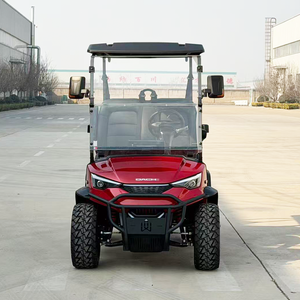
In premier luxury golf destinations such as Quinta do Lago, Vilamoura, and Vale do Lobo, vehicles are in operation up to 14 hours per day. Turf preservation is critical; standard harsh leaf springs cause tire skidding and grass tearing on tight turns. Independent front and rear coilover suspensions allow each wheel to articulate independently over undulating greens and paved cart paths. This design preserves turf integrity, maintains silent passenger cabin isolation, and prevents localized frame stress caused by repetitive road impact.
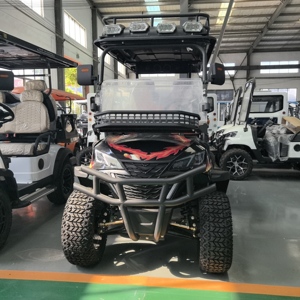
Vineyards along the Douro Valley and agrarian estates in Minho feature severe elevation changes, cobbled tracks, and unpaved mud trails with inclines reaching up to 25 degrees. Transporting heavy grape harvests, equipment, or maintenance personnel requires heavy-duty lifted utility carts equipped with long-travel coilover shocks (minimum 4.5 inches of usable travel). High-rebound dampening prevents rear suspension sag when fully loaded with up to 500kg of cargo, keeping front steering geometry stabilized for safe downhill braking.
Municipalities in Lisbon, Sintra, and Porto are expanding zero-emission zones (ZEZ) and pedestrian-first historic districts. Traditional utility vehicles traversing centuries-old basalt and granite cobblestones experience severe high-frequency chassis vibration, leading to premature electronics failure, wire harness degradation, and operator fatigue. Monotube coilover shocks act as mechanical low-pass filters, absorbing micro-impacts before kinetic energy transfers to the aluminum chassis frame or delicate electronic controllers.
The autonomous islands of Madeira and the Azores feature steep volcanic roads coupled with dense, humid coastal air. Imported golf carts must be engineered from the factory floor with corrosion-resistant alloys, stainless steel spherical rod ends, sealed ball joints, and anodized coil collars to prevent chemical seizure from marine salt air exposure while climbing steep mountain corridors.
The table below highlights the engineering metrics evaluated during factory dyno testing and accelerated life-cycle simulations. Sourcing carts engineered with factory-integrated coilover shocks directly translates into superior vehicle dynamics and reduced long-term maintenance costs for Portuguese buyers.
| Performance Characteristic | Conventional Leaf Spring Suspension | OEM Heavy-Duty Coilover Shock System | Operational Impact for Portugal Fleets |
|---|---|---|---|
| Spring Rate Characteristics | Linear / Rigid (Harsher as payload decreases) | Progressive Rate (Self-adjusting to load demands) | Smooth unladen luxury ride; zero bottoming under 500kg max load. |
| Damping Mechanism | Unpressurized twin-tube oil shock (Prone to fade) | High-pressure Nitrogen gas monotube with velocity valving | Zero performance degradation during 12+ hour daily resort shifts. |
| Corrosion Resistance | Standard black paint (Rusts within 6 months near coast) | C5-M Electrostatic powder coat & Anodized T6 billet aluminum | Prevents structural failure in Algarve & Atlantic island environments. |
| Wheel Articulation & Travel | Restricted (1.5 - 2.5 inches max) | Independent Long-Travel (3.5 - 5.5 inches) | Superior traction on steep Douro vineyard slopes and cobbles. |
| Chassis Vibration Transfer | High (Transmits kinetic shock directly to battery box) | Low (Isolated via polyurethane spherical bushings) | Protects internal Lithium BMS cell welds and touchscreen electronics. |
| Maintenance Requirements | Frequent greasing, squeak suppression, bushing replacement | Maintenance-free sealed shock bodies & spherical joints | Reduces fleet shop labor costs by up to 65% over a 5-year cycle. |
As a premier global manufacturing facility specializing in high-capacity utility carts, lifted buggies, and low-speed electric vehicles (LSVs), our operations are structured around uncompromising quality engineering. Drawing upon decades of combined automotive and LEV expertise—exemplified by standards seen in American engineering centers such as Williston, Florida—our factory floor operates under rigorous ISO 9001:2015 and IATF 16949 quality management systems.
Every coilover spring is precision-wound on fully automated CNC coiling machines using high-tensile SAE 9254 silicon-chrome alloy wire. Coils undergo shot-peening and stress-relieving heat treatments to guarantee zero spring height sag over years of heavy commercial payload service.
100% of manufactured shock absorbers undergo computerized dyno testing before chassis assembly. Force-velocity graphs verify low-speed compression, high-speed impact valving, and rebound rebound damping against strict engineering tolerance bands.
We provide full customization for Portuguese B2B importers, including custom spring rates tuned specifically for heavy cargo boxes, customized vehicle ride heights (from standard turf to 6-inch lifted configurations), bespoke valving, and custom powder-coated color options.
Equip your commercial fleet, resort operations, or distribution dealership in Portugal with high-performance electric golf carts and custom chassis platforms built to rigorous European standards. Contact our engineering and export sales team today for itemized B2B quotations, technical drawings, and OEM partnership details.