
Industry Executive Abstract: As global automotive markets rapidly transition toward high-weight electric vehicles (EVs), personal transportation vehicles (PTVs), low-speed vehicles (LSVs), and high-performance aftermarket platforms, the engineering criteria for braking components have undergone a fundamental paradigm shift. Traditional gray iron casting and single-piston floating calipers are increasingly inadequate for handling the thermal loads, instant kinetic acceleration, and strict kinetic energy recovery (regenerative braking) demands of contemporary transport.
This industry research report serves as an authoritative procurement benchmark for tier-1 distributors, automotive fleet managers, golf cart manufacturers, and commercial exporters. Backed by decades of combined metallurgical research, automated assembly line validation, and rigorous SAE J2522 dynamometer protocols, our manufacturing framework sets the benchmark for stopping power, thermal dissipation efficiency, and structural reliability under maximum mechanical stress.
Establishing a robust supply chain for vehicle braking systems demands more than basic manufacturing capacity; it requires end-to-end quality control, traceable metallurgical standards, and domestic engineering validation. Building on over 70 years of combined vehicle design expertise, our production ecosystems bridge the gap between heavy-duty automotive standards and specialized electric cart/LSV requirements.
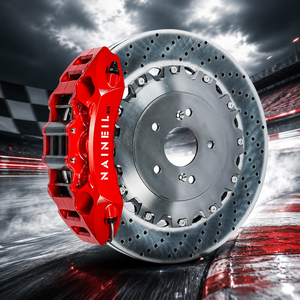
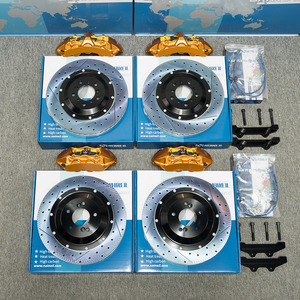
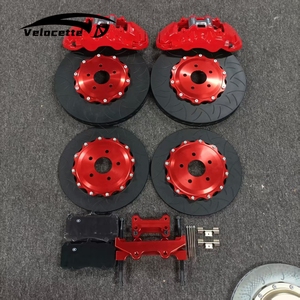
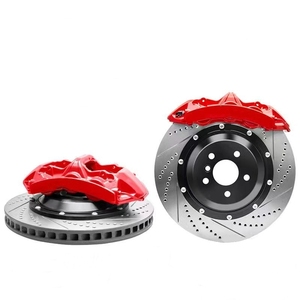
Unlike standard cast calipers prone to structural porosity under hydraulic spikes, our multi-piston kits are 3D-CNC machined from aerospace-grade 6061-T6 forged aluminum billets, ensuring maximum rigidity and reduced unsprung mass.
Every rotor, pad set, and caliper assembly undergoes 100% dynamic balance testing, ultrasonic flaw detection, and high-pressure hydraulic line seal inspections compliant with ISO/TS 16949 global automotive standards.
From raw material billet casting to final anodized surface finishing, we eliminate third-party markup and control every variable on the manufacturing floor, shortening order lead times for global B2B buyers.
In high-torque applications—such as lifted 6-passenger golf carts, commercial transport vehicles, or modified high-horsepower passenger cars—traditional two-piece cast calipers exhibit "caliper flex" under hard emergency braking. This expansion degrades pedal feel and unevenly wears friction pads. Forged monobloc calipers eliminate body flex entirely, delivering linear hydraulic pressure distribution and reducing braking distances by up to 22%.
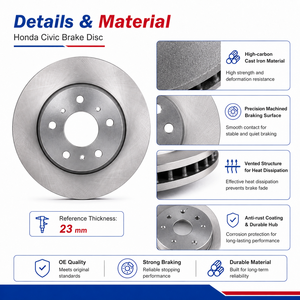
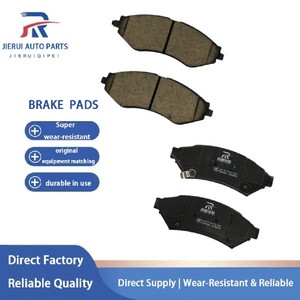
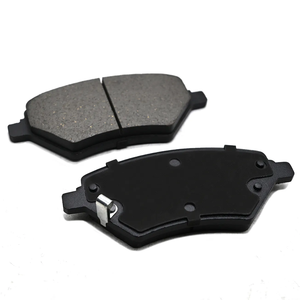
The core mechanics of kinetic energy absorption lie within the thermal transfer interface between the brake disc (rotor) and the friction material (pad). Standard semi-metallic pads often generate excessive brake dust, accelerate rotor wear, and induce thermal NVH (Noise, Vibration, Harshness). Our engineering response integrates high-carbon cast iron rotors with advanced ceramic friction compounds.
| Parameter / Specification | Standard OEM Semi-Metallic | Advanced Ceramic Performance Grade | Industrial Advantage |
|---|---|---|---|
| Friction Coefficient (μ) | 0.32 – 0.36 | 0.38 – 0.45 | Higher initial bite and emergency stopping force |
| Thermal Degradation Limit | 450 °C | 850 °C | Prevents brake fade during continuous down-slope braking |
| Dust & Particulate Output | High Metallic Particulates | Ultra-Low Ceramic Micro-Dust | Keeps alloy wheels clean and protects hub components |
| Operating Lifespan | 20,000 – 35,000 km | 30,000 – 60,000 km | Significantly lowers long-term fleet maintenance costs |
| NVH Damping Rating | Moderate (< 70 dB) | Ultra-Quiet (< 45 dB) | Eliminates high-frequency brake squeal under cold starts |
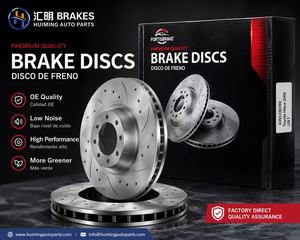
Brake rotors do not simply stop a vehicle; they act as thermal exchangers that convert kinetic movement into heat energy. Our directional slotted and cross-drilled rotors feature internal curved vane geometry (pillar-vented design). This architecture acts as a centrifugal pump, drawing cooler ambient air through the center of the hub and forcing hot gas, dust, and moisture off the friction surface. This engineering prevents surface glazing and structural warping even under repeated high-speed deceleration cycles.
Sourcing directors and B2B purchasing managers must align their inventory strategies with macro-industry developments. Based on global market analysis, four primary vectors are redefining international braking component procurement over the next decade:
Electric golf carts and low-speed passenger vehicles carry heavy lithium battery packs (such as 173Ah units), increasing total kerb weight by 15-25%. Future procurement requires higher torque-rated multi-piston calipers and anti-corrosive electro-coated (E-coated) rotors that withstand moisture exposure without rusting during idle periods.
Regulatory bodies in North America and Europe are imposing strict limits on copper and heavy-metal content in brake friction linings. Global buyers must prioritize copper-free ceramic pad formulations to meet environmental compliance laws without compromising stopping power.
Modern distributors no longer accept generic unbranded hardware. Sourcing demand has shifted toward customizable caliper colors (anodized laser-etched logos), bespoke bracket fabrication for plug-and-play fitment, and custom consumer-facing packaging suited for direct retail display.
The technological trajectory of low-speed personal transportation and commercial vehicles mirrors the rapid evolution seen in mainstream automotive engineering. Understanding this roadmap allows vehicle assemblers and aftermarket suppliers to stay ahead of market shifts.
Traditional mechanical drum brakes rely on steel tension cables that stretch, rust, and require frequent manual adjustment. The industry is rapidly adopting hydraulic disc braking systems featuring integrated electronic parking brakes (EPB) and Brake-by-Wire actuators. This shift enables seamless integration with vehicle touchscreens (such as 12.5-inch digital dashboards), providing real-time pad wear diagnostics, automated hill-hold control, and regenerative energy matching.
Furthermore, the introduction of lightweight composite matrix rotors and titanium-tinted piston inserts reduces thermal transfer into hydraulic brake fluid (DOT 4/5.1). This step prevents fluid boiling and pedal loss during aggressive downhill driving, ensuring maximum safety for high-occupancy 6-passenger vehicles and utility carts.
Clear technical answers to help purchasing managers, importers, and original equipment manufacturers evaluate our production and export capabilities.
Our standard manufacturing MOQ for custom laser-etched logos and specialized anodized caliper colors (such as racing red, electric blue, or gloss black) starts at 50 sets per model application. For standard factory-finished kits, sample orders and small-batch orders are accommodated to support prototype testing.
A 6-piston configuration distributes hydraulic fluid across three distinct piston diameters on each side of the caliper body. This staggered piston arrangement ensures uniform pad pressure against the rotor, eliminating uneven pad wear ("taper wear") and providing a significantly larger effective friction surface area. This results in up to 25% shorter stopping distances and superior pedal modulation.
Yes. We manufacture vehicle-specific CNC-machined mounting brackets (adapters) and high-strength steel center hats. Whether retrofitting passenger SUVs (such as Toyota Land Cruiser Prado LC200/LC300, Audi A6, BMW series) or specialized electric golf cart chassis (like Atlas, Club Car, EZGO, Yamaha), our kits are engineered as direct bolt-on solutions requiring no permanent vehicle modification.
Our manufacturing facilities operate under strict IATF 16949 and ISO 9001 quality management standards. Components undergo SAE J2522 dynamometer friction performance testing, salt spray corrosion validation (ASTM B117), and TUV-aligned structural stress checks prior to export packing.
We provide a comprehensive 3-year warranty on all forged caliper bodies and mounting brackets, along with a 30,000 to 60,000 km performance guarantee on ceramic brake pad sets under standard operating conditions. Replacement parts and technical support documentation are readily available for global dealer networks.
All complete Big Brake Kits and rotor sets are enclosed in custom-molded high-density EVA foam liners inside reinforced double-wall corrugated export cartons. Metal components receive VCI (Vapor Corrosion Inhibitor) anti-rust wrapping to guarantee pristine condition upon arrival at destination ports worldwide.
Elevate your product lineup with engineered stopping power, forged multi-piston calipers, and factory-direct wholesale pricing. Connect with our engineering team today for technical specifications, CAD drawings, and volume quotations.
Inquire Now