
Explore our top-exported industrial, commercial, and laboratory service trolleys engineered for rigorous structural compliance, optimal ergonomics, and maximal load durability.
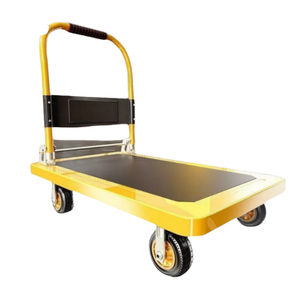
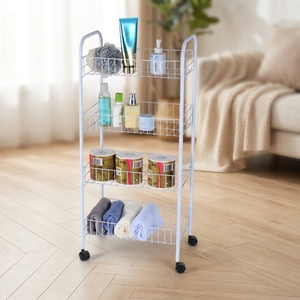
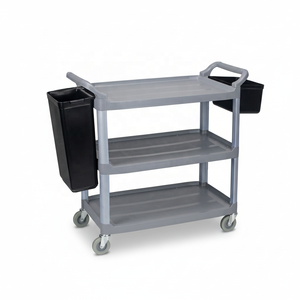
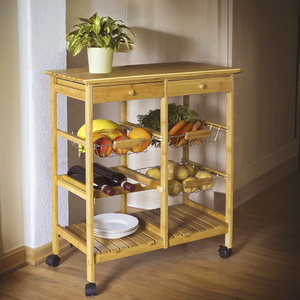
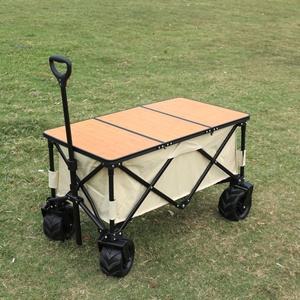
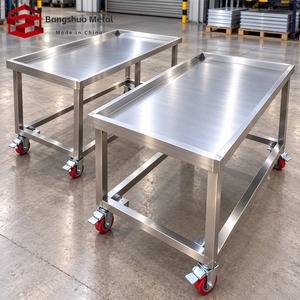
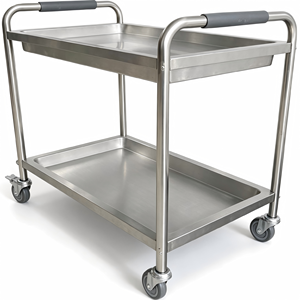
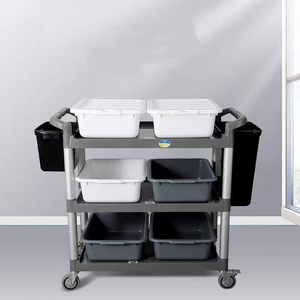
In the modern global supply chain landscape, selecting a premier China Utility Cart Exporter is no longer merely a transaction focused on unit price. It is a strategic operational investment. Commercial utility carts, service trolleys, and heavy-duty platform trucks serve as the crucial micro-logistics backbone across diverse sectors including hospitality, healthcare laboratories, warehousing, food services, and outdoor recreational operations.
According to recent B2B material handling market intelligence, global procurement leaders are shifting their intent from lowest nominal bid toward Total Cost of Ownership (TCO), supply chain resilience, structural modularity, and strict metallurgical/polymer standards. As China continues to dominate global material handling equipment (MHE) manufacturing, top exporters must demonstrate high Information Gain by providing complete transparency into material density, load-bearing stress calculations, caster rolling resistance coefficients, and environmental compliance (such as RoHS and REACH benchmarks).
Substandard utility carts imported from unverified sources frequently suffer from premature weld fatigue, wheel bearing seizure, plate warpage under dynamic loads, and chemical degradation from commercial cleaning detergents. Replacing compromised units leads to unexpected downtime, workplace safety liabilities, and escalated freight costs.
Leading Chinese exporters leverage integrated supply ecosystems—combining robotic CNC tube bending, automated powder coating, precision plastic injection molding, and rigorous QA testing. This synergy ensures uniform dimensional tolerances, certified payload thresholds, and long-term operating durability.
To enable informed purchasing decisions, the engineering team at our export facility has synthesized a comparative technical matrix highlighting the material science behind modern utility cart construction.
| Material Classification | Structural Advantages | Max Load Range | Corrosion Rating | Optimal Deployment Environment |
|---|---|---|---|---|
| SUS304 Stainless Steel | Antibacterial, non-porous surface, high tensile strength, seamless TIG welds | 150 kg – 350 kg | Superior (Salt Spray > 500 hrs) | Commercial Kitchens, Hospitals, Cleanrooms, Seafood Processing |
| 6061-T6 Aluminum Alloy | Extremely lightweight, high strength-to-weight ratio, structural oxidation layer | 100 kg – 250 kg | Excellent (Natural Anodization) | Express Logistics, Folding Platform Carts, Mobile Service Technicians |
| High-Density Polypropylene (HDPE/PP) | Impact resistant, chemical inertness, non-marking noise reduction decks | 80 kg – 200 kg | Immune to Rust | Hotel Housekeeping, Chemical Laboratories, Office Storage |
| Heavy-Duty Carbon Steel | Maximum yield strength, economical bulk structural support, rigid geometry | 200 kg – 500+ kg | Good (Industrial Powder Coated) | Automotive Workshops, Heavy Warehouses, Outdoor Logistics |
As corporate ESG (Environmental, Social, and Governance) commitments and smart logistics integration accelerate globally, utility cart manufacturing and procurement are undergoing substantial technological shifts. B2B buyers must align with exporters who actively innovate across these core dimensions:
Workplace musculoskeletal injuries represent a massive liability for commercial enterprises. Modern utility cart designs incorporate low-rolling-resistance TPR (Thermoplastic Rubber) and Precision Ball Bearing casters that cut initial push-force requirements by up to 35%, ensuring compliance with global OSHA ergonomics standards.
Global container freight volatility demands optimal volumetric efficiency. Exporters are shifting to knock-down (KD) modular designs. By engineering snap-fit connections and high-strength fasteners, flat-pack utility carts reduce shipping volume by 60%, drastically reducing per-unit landed costs.
Leading Chinese exporters are implementing post-consumer recycled (PCR) polypropylene and zero-waste aluminum recycling loops. Choosing carts manufactured via clean energy and eco-friendly coatings enables Western importers to fulfill stringent corporate carbon footprint mandates.
The Chinese manufacturing sector has evolved beyond high-volume duplication into precision industrial engineering. Modern utility cart factories utilize advanced production technologies that fundamentally enhance product longevity and field performance:
Traditional manual arc welding often introduces localized thermal stresses and uneven bead joint profiles, which prone tubular cart frames to cracking under heavy loads. Modern automated fiber laser cutters achieve sub-millimeter tolerances, while 6-axis robotic welding arms deliver uniform, penetration-verified seams across every chassis joint.
This structural consistency guarantees that multi-tier stainless steel service trolleys maintain total frame rigidity even when navigating uneven floor thresholds under maximum payload capacities.
Noise pollution in hospital wards, luxury hotel corridors, and high-end dining rooms is a critical customer experience metric. Advanced commercial trolley engineering integrates sound-deadening rubber undercoating underneath stainless steel shelf trays.
Combined with non-marking thermoplastic caster treads and anti-rattle bucket mountings (as seen in our AF08162A series), operational noise levels are maintained below 45 decibels—meeting rigorous acoustic comfort standards.
As a premier China Utility Cart Exporter, our integrated facility bridges design innovation, rigorous quality control, and global supply chain reliability.
Every production batch undergoes a rigorous 4-stage QA protocol: raw metal spectrographic verification, salt-spray corrosion chamber testing (up to 500 hours), dynamic caster fatigue testing over obstacles, and static overload testing at 150% rated capacity.
From custom tray embossing and tailored powder-coat RAL color matching to proprietary dimensional adjustments, our engineering team converts client CAD specifications into prototype samples within 7 to 10 business days.
Located in close proximity to major deep-water ports (Ningbo/Shanghai/Shenzhen), we maintain strategic buffer stock for core models, enabling standard container dispatch within 14 days of order confirmation.
Our manufacturing protocols fully align with ISO9001:2015 quality management systems, ISO14001 environmental standards, and CE/RoHS material safety compliance required for European and North American markets.
Essential guidance for commercial buyers, importers, and procurement directors evaluating Chinese utility cart suppliers.
Request an immediate factory direct quotation, request OEM custom sample development, or consult with our senior MHE export engineers today.