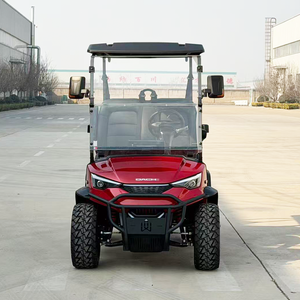
Explore our engineered range of heavy-duty hand trucks, electric platform lifts, scissor trolley tables, and multi-passenger utility golf buggies built for global wholesale distribution.
The global industrial cart, material handling, and personal electric vehicle (PEV) market is undergoing an unprecedented technological migration. Industrial buyers, enterprise logistics managers, and commercial distributors sourcing from Top China Cart Wholesale Factories & Exporters must evaluate suppliers beyond simple unit costs. Modern procurement demands rigorous examination of structural engineering tolerances, battery safety protocols, component standardization, and long-term total cost of ownership (TCO).
As manufacturing hubs in Shandong, Zhejiang, and Jiangsu integrate advanced robotics, automated laser cutting, and robotic powder coating lines, Chinese OEMs have elevated their capabilities from high-volume assembly to original precision engineering. This whitepaper establishes a data-driven benchmark for global buyers navigating wholesale sourcing across two primary operational pillars: Heavy-Duty Industrial Handling Vehicles (Hydraulic Scissor Lift Tables & Stair-Climbing Hand Trucks) and Electric Commercial & Personal Transportation Vehicles (Lifted Utility Buggies & Golf Carts).
To establish actionable information gain for procurement decision-makers, we analyze the structural mechanics, electrical architecture, and hydraulic systems across top-tier export cart categories.
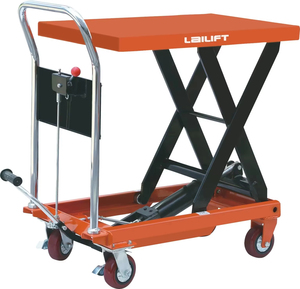
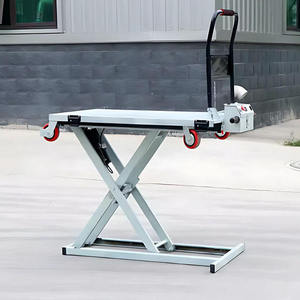
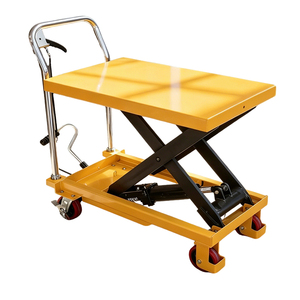
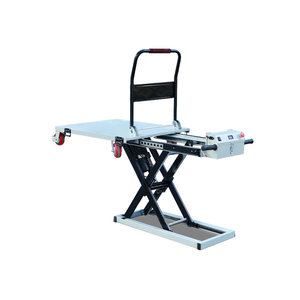
Hydraulic scissor lift trolleys are essential for ergonomic load positioning, assembly line material feeder systems, and warehouse order picking. Premier Chinese exporters utilize Q235 structural carbon steel for scissor linkage arms to prevent lateral deflection under dynamic maximum load conditions.
Key Engineering Specifications to Benchmark:
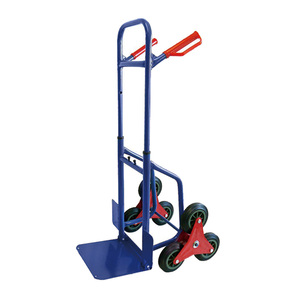
Logistics for last-mile delivery, vending machine transport, and heavy home appliance distribution require specialized kinematic assistance. The HT2806A Stair-Climber platform utilizes a rotational tri-wheel assembly engineered to transfer kinetic load smoothly over step nosings.
Critical Manufacturing Standards:
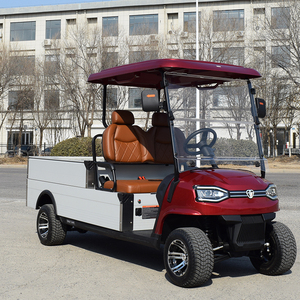
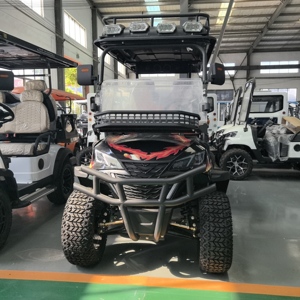
Commercial resort transport, gated community mobility, and multi-terrain utility trucks demand robust drivetrains. Modern Chinese OEMs have largely abandoned legacy 3.5kW DC brushed motors in favor of 5kW to 7.5kW AC Induction and Permanent Magnet Synchronous Motors (PMSM) coupled with high-efficiency Curtis or Toyota controllers.
Powertrain & Safety Innovations:
Evaluating export factories requires a structured audit protocol. Overseas buyers cannot rely solely on online marketing collateral. The Google Search Quality Rater Guidelines emphasize Experience, Expertise, Authoritativeness, and Trustworthiness (E-E-A-T). In industrial procurement, E-E-A-T is reflected in certified factory quality systems, traceable raw material supply chains, and transparent warranty execution.
| Evaluation Vector | Standard Tier Exporters | Top-Tier OEM Factories (Atlas-Standard) | B2B Buyer Risk Mitigation Impact |
|---|---|---|---|
| Chassis Welding | Manual MIG Welding | Fully Automated Robotic Laser Welding | Eliminates structural stress fractures & dimensional variance. |
| Corrosion Resistance | Single-layer spray paint | E-Coating + Electrostatically Applied Powder Coating | Passes 500-hour salt spray testing; ideal for coastal resorts. |
| Battery BMS System | Generic unbranded BMS | Smart CAN-bus BMS with Active Thermal Balancing | Prevents thermal runaway, overcharge, and cell degradation. |
| Certification Scope | Self-declared CE mark | TÜV-certified CE, ISO9001:2015, OSHA & ANSI/ITSDF B56.8 compliant | Ensures legal importation and smooth customs clearance in US/EU. |
| Powertrain Warranty | 1-Year Limited Parts | Lifetime Powertrain & 10-Year Battery Warranty Coverage | Protects commercial fleet operators against capital loss. |
The global wholesale cart sector is shifting rapidly due to regulatory updates, environmental directives, and connected technology demands. Forward-looking procurement teams must align with factories actively investing in three macro trends:
While 48V remains the current industry baseline, enterprise fleets are migrating toward 72V and 80V architectures. Higher system voltage yields reduced current draw (amperage), drastically reducing wiring harness thermal strain and extending motor efficiency by 18% during heavy payload hill climbs.
Modern commercial buyers expect real-time visibility. Next-generation carts exported from top Chinese facilities feature embedded 4G GPS telematics, enabling fleet managers to monitor cell-level battery metrics, track geofenced operational boundaries, and receive over-the-air (OTA) firmware updates.
Leading Chinese exporters are implementing modular chassis architectures. A single base frame can now be configured on the assembly line as a 2-passenger utility cargo truck, a 4-passenger lifted buggy, or a specialized hydraulic maintenance cart, significantly reducing OEM tooling lead times for wholesale buyers.
When evaluating wholesale cart prices, initial FOB purchase price represents only a fraction of total life-cycle expenditure. Enterprise buyers conducting ROI analyses must evaluate maintenance frequency, battery longevity, and energy conversion efficiency.
1. Maintenance Costs: Traditional lead-acid batteries require bi-weekly distilled water topping, terminal corrosion treatment, and equalizing charges. Lithium LiFePO4 packs require zero maintenance, saving an estimated 120 labor hours per cart over 5 years.
2. Battery Replacement Cycles: Lead-acid cells typically deteriorate within 500 to 800 charge cycles (1.5 to 2 years under daily commercial use). In contrast, premium 173Ah LiFePO4 batteries deliver over 3,500 to 5,000 cycles (8 to 10+ years), eliminating mid-lifecycle battery replacement capital expenses.
3. Energy Efficiency & Weight: Lithium packs are approximately 70% lighter than equivalent capacity lead-acid battery banks. This weight reduction directly correlates to reduced tire wear, lower shock absorber fatigue, and a 22% reduction in kilowatt-hour electrical consumption per kilometer traveled.
Our manufacturing and export platform integrates decades of specialized cart engineering experience. By establishing strict quality gates at every step of production, we ensure that every unit leaving our facility matches international commercial expectations.
Our engineering team leverages advanced 3D CAD stress simulation and finite element analysis (FEA) to validate structural integrity prior to physical prototype assembly. We offer bespoke chassis modifications for specialized industrial applications.
100% of manufactured carts undergo dynamic road testing, high-pressure water tightness testing, 45-degree incline hill-hold testing, and maximum load hydraulic pressure endurance testing prior to container loading.
We provide specialized SKD (Semi-Knocked Down) and CKD (Completely Knocked Down) packaging solutions, allowing wholesale importers to maximize 40ft HQ container loading capacity by up to 40%, significantly cutting per-unit ocean freight costs.
Below are authoritative answers to the primary technical and commercial inquiries raised by international wholesale buyers, fleet operators, and distributors.
Partner with a premier Chinese cart manufacturer. Contact our engineering and export team today to receive itemized FOB/CIF pricing, full dimensional schematics, and custom OEM program details.