2026 Global OEM/ODM Procurement Report

Top 10 Neighborhood Vehicle Manufacturer & Exporters

An Industrial Whitepaper on Fleet Electrification, LSV Homologation & Global Supply Chain Dynamics

Export-Ready Fleet Portfolio

Featured Neighborhood Electric Vehicles (NEVs & LSVs)


Rigorously tested, CE certified, and DOT/FMVSS 500 compliant electric low-speed vehicles engineered for resort operations, gated community transit, commercial security patrols, and last-mile urban mobility.
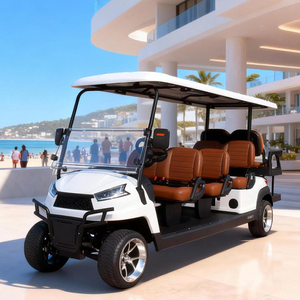
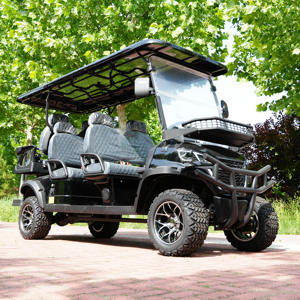
Hot Selling 4 Seater Neighborhood Electric Vehicle LSV

Hot Selling 4 Seater Neighborhood Electric Vehicle LSV for Gated Communities & Resorts

  • Configuration: 4-Passenger Forward
  • Motor System: 48V 4kW / 5kW AC
  • Battery Option: Lithium LiFePO4 / AGM
  • Max Speed: 25 - 40 km/h
Get Catalog
4+2 Seater Golf Cart Electric LSV with Infrared Camera

4+2 Seater Golf Cart Electric LSV 6 Passenger with Infrared Camera & Night Vision

  • Configuration: 6-Passenger (4+2 Flip)
  • Safety Tech: Infrared Cam / Screen
  • Drivetrain: 72V High Torque AC
  • Certification: Street Legal LSV
Get Catalog
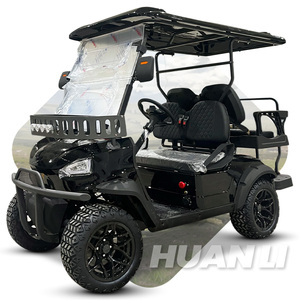
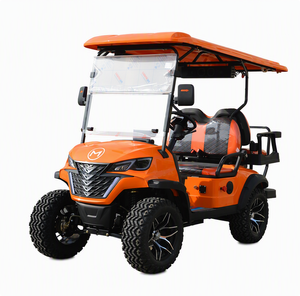
High Speed Electric Golf Cart with Disc Brakes

New Design High Speed Electric Golf Cart with 4-Wheel Disc Brakes & Off-Road Package

  • Braking: Hydraulic Disc Brakes
  • Tires: 23-Inch All-Terrain
  • Suspension: Independent Coil-Over
  • Top Speed: 45 km/h (Adjustable)
Get Catalog
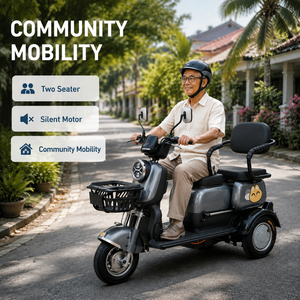
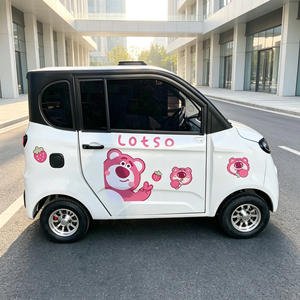
Electric TukTuk 800W Motor Family Trike

Electric TukTuk 800W Motor Low-Noise Operation Family Trike for Short Distance Errands

  • Drive Type: Rear Differential Trike
  • Motor: 800W Brushless Silent
  • Payload: 350 kg Maximum
  • Use Case: Micro-Mobility / Utility
Get Catalog
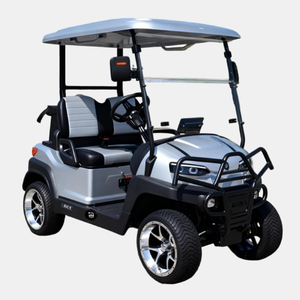
Customizable Lithium Battery 2 Person Electric Golf Cart

Customizable Lithium Battery Neighborhood 2 Person Golf Cart with Patented Controller

  • Seating: 2-Passenger Compact
  • Battery: Smart BMS LiFePO4
  • Controller: Patented Sine-Wave
  • Efficiency: 100+ km Range / Charge
Get Catalog
4 Seats Heavy Duty Neighborhood Patrol Electric Vehicle

4 Seats Street Legal Heavy-Duty Electric Vehicle for Residential Community Patrol

  • Chassis: Anti-Corrosion Aluminum
  • Compliance: CE / DOT Street Legal
  • Equipment: Strobe Light & Siren Mount
  • Customization: OEM / ODM Supported
Get Catalog
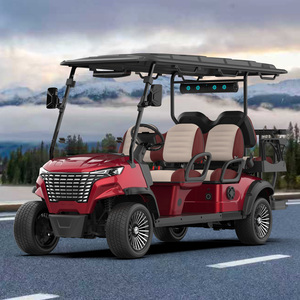
6 Seat Electric Golf Cart 5KW AC Motor 72V

High Cost-Performance 6-Seat Electric Golf Cart 5KW 72V AC Drivetrain Aluminum Frame

  • Capacity: 6 Full-Size Seats
  • Powerplant: 72V 5kW Premium AC
  • Range: up to 90 km per charge
  • Frame: Electrophoretic Aluminum
Get Catalog
UCB-12 4 Seater Electric Sightseeing Car

UCB-12 4 Seater Electric Sightseeing Car High Efficiency Battery Power Luxury Mobility

  • Design: Luxury Panoramic View
  • Battery: High Energy Density Pack
  • Drive Mode: Smooth ECO Drivetrain
  • Commercial: Hospitality & Tourism
Get Catalog
Industry Intelligence & E-E-A-T Insights

Navigating the Global Neighborhood Electric Vehicle (NEV) Landscape


The global shift toward localized zero-emission mobility has fundamentally transformed the micro-transportation sector. Once categorized primarily as leisure vehicles, Neighborhood Electric Vehicles (NEVs) and Low-Speed Vehicles (LSVs) have evolved into critical infrastructure components for master-planned gated communities, municipal enforcement fleets, luxury hospitality resorts, and corporate campuses.

Commercial B2B buyers and international distributors face an increasingly complex procurement environment. Evaluating manufacturers requires moving beyond superficial aesthetic customization to audit structural engineering, battery management system (BMS) telemetry, homologation status (such as US DOT FMVSS 500 and European L7e standards), and global spare parts logistics resilience.

Key Procurement Metrics

Professional procurement audits for 2026 emphasis four foundational technical benchmarks:

  • Thermal Stability & Safety: Transitioning from lead-acid to chemistry-stable Lithium Iron Phosphate (LiFePO4) with active thermal monitoring.
  • Chassis Longevity: Hot-dip galvanized or automotive-grade aluminum alloy subframes to survive high-salinity coastal environments.
  • Powertrain Efficiency: 72V AC induction or Permanent Magnet Synchronous Motors (PMSM) replacing brushed DC drive units.
  • Digital Integration: Automotive-grade CAN-bus telemetry, smart touchscreen command centers, and predictive fault diagnostic reporting.
173Ah
Standard Lithium Capacity
5.0kW
AC High-Torque Motor
12.5"
HD Touchscreen Telematics
10Yrs
Battery Warranty Protection
Institutional Benchmark

Why US Engineering Standards Redefine the NEV Industry


By pairing advanced North American design and quality control with high-capacity global supply chains, modern NEV platforms eliminate the high failure rates and maintenance burdens historically associated with budget import vehicles.

Standardized 173Ah LiFePO4 Power

While traditional suppliers offer low-capacity 100Ah lead-acid or basic lithium packs as expensive optional add-ons, top-tier manufacturers install a heavy-duty 173Ah LiFePO4 battery pack as standard equipment. This guarantees true 100+ km daily range, eliminates voltage sag under heavy incline loading, and provides over 3,500 full charge cycles.

Automotive-Grade 5kW AC Drivetrain

Integrated 5kW AC drive motors paired with intelligent sine-wave controllers deliver instantaneous linear torque and smooth regenerative braking. Regenerative deceleration recharges the battery bank during downhill descents while reducing mechanical brake pad wear by up to 60% over vehicle lifecycle.

12.5-Inch Touchscreen Telematics

Moving beyond analog gauges, modern neighborhood vehicles feature a centralized 12.5" high-definition touch display. It integrates real-time speed, state of charge (SoC), camera system integration (including rear-view and infrared night vision), bluetooth audio connectivity, and plain-language diagnostic fault coding.

Independent Coil-Over Suspension

To resolve the harsh, unstable ride quality of traditional leaf-spring setups, advanced vehicles implement a 4-wheel independent coil-over shock suspension system. This delivers superior roll stiffness, precise cornering stability, and enhanced passenger comfort across paved roads and unpaved terrain.

Complete FMVSS 500 Compliance

Every street-legal model is engineered to comply with Federal Motor Vehicle Safety Standard 500 (FMVSS 500). Standard safety hardware includes DOT-certified AS1 windshields, 3-point seatbelts, high-intensity LED headlamps/taillamps, side mirrors with integrated turn signals, and mechanical parking brakes.

Lifetime Powertrain Warranty Support

Uncompromising engineering quality enables market-leading warranty coverage: a lifetime warranty on chassis frame components and AC drivelines, a 10-year warranty on lithium-ion battery packs, and a 3-year bumper-to-bumper bumper replacement policy backed by regional service depots.

Technical Evaluation Matrix

B2B Manufacturing & Export Technical Comparison


A comparative analysis of manufacturing standards separating top-tier tier-1 OEM manufacturers from low-cost entry-level exporters.

Evaluation Parameter Tier-1 OEM Standards (Recommended) Generic Commodity Exporters Commercial Advantage
Battery Chemistry LiFePO4 with Smart CAN-Bus BMS (173Ah std.) Flooded Lead-Acid / Basic 60Ah-100Ah Lithium 2.5x Range & Zero Maint.
Drive Motor Type 5.0kW - 7.5kW AC Induction / PMSM Silent Drive 3.0kW DC Brushed Motor +40% Incline Torque
Chassis Architecture High-Strength Aluminum / Hot-Dip Galvanized Painted Mild Steel (Prone to rust) Rust-Proof Lifetime Use
Braking System 4-Wheel Hydraulic Disc + Electro-Magnetic Brake Rear Drum Brakes Only 50% Shorter Stopping Dist.
Display & Controls 12.5" HD Capacitive Touchscreen with OBD Simple Analog Voltmeter & Speedometer Live Fleet Telematics
Homologation DOT FMVSS 500, EEC/CE L7e Street Legal Uncertified / Off-Road Golf Use Only Public Road Compliant
Strategic Sourcing Analysis

Future Procurement Trends in NEV Sourcing (2026-2030)


Fleet buyers, municipal planners, and resort developers are drastically shifting how they allocate capital for short-distance transport. When evaluating OEM suppliers for multi-year procurement programs, modern purchasing teams focus heavily on the following macro-trends:

1. High-Voltage (72V) Architecture Standardization

Legacy 48V electrical systems are rapidly being phased out in favor of 72V architectures. Higher operating voltage reduces electrical current draw (amperage), minimizing thermal heat generation in wiring harnesses and improving overall energy efficiency by 15-20%. This provides higher peak torque for multi-passenger vehicles carrying 6 to 8 occupants up steep inclines.

2. Telematics & IoT Cloud Integration

Commercial buyers managing large fleets require real-time visibility. Modern NEVs come factory-equipped with 4G/5G GPS telematics modules, enabling remote geofencing, speed governor adjustments, remote battery health diagnostics, and automated maintenance alerts sent directly to fleet operations managers.

Global Market Drivers

Macro Industry Development & Sustainability Trends


Regulatory pressures and localized environmental goals are forcing rapid innovation across low-speed mobility manufacturing:

Automotive Safety Homologation

As municipalities permit LSVs on public roads with speed limits up to 35 mph (55 km/h), regulatory oversight has tightened. Manufacturers are incorporating automotive-grade safety features such as crash-tested roll-cage frames, dual-stage airbag systems, pedestrian alert sounds (AVAS), and integrated night-vision infrared cameras.

Modular Chassis & Solar Integration

To support diverse utility functions—from passenger shuttles to cargo drop-beds and security patrols—leading exporters utilize modular lightweight aluminum chassis platforms. Furthermore, integrated roof-mounted flexible solar panels are gaining popularity, adding 8-15 km of passive daily range replenishment for sun-rich resort applications.

Buyer Knowledge Base

Frequently Asked Questions (FAQ) for B2B Purchasing


Critical guidance addressing technical specs, compliance, minimum order quantities (MOQ), and shipping logistics for international distributors and fleet purchasers.

Q: What is the key technical difference between a Golf Cart, a PTV, and an LSV?
A traditional Golf Cart is built primarily for off-road or golf course use, typically capped at 15-19 mph without strict safety equipment requirements. A Personal Transportation Vehicle (PTV) is configured for gated community driving with speeds up to 20 mph. A Low-Speed Vehicle (LSV) is a federally regulated vehicle class (such as DOT FMVSS 500 in the US or L7e in Europe) capable of 25 mph (40 km/h) equipped with VIN numbers, seatbelts, windshield wipers, DOT lighting, and hydraulic brakes, allowing it to legally drive on public roads posted up to 35 mph.
Q: Why is Lithium Iron Phosphate (LiFePO4) preferred over standard Lithium-Ion (NMC) or Lead-Acid batteries?
LiFePO4 battery technology provides exceptional thermal and chemical stability, making it virtually immune to thermal runaway or fire risks associated with NMC chemistry. Compared to lead-acid batteries, LiFePO4 packs weigh 70% less, charge 3x faster, maintain consistent voltage outputs throughout the charge cycle, require zero fluid maintenance, and offer 3,500+ charge cycles (lasting 8-10+ years) versus 400-500 cycles for lead-acid.
Q: What are the minimum order quantities (MOQ) and lead times for custom OEM/ODM manufacturing?
Standard OEM production minimums typically start at a single 20ft container (approx. 4-6 units) or a 40ft HQ container (approx. 12-18 SKD/CKD units depending on assembly knock-down status). Sample units for distributor testing can be arranged. Standard factory lead time ranges between 15 to 25 business days, with custom paint finishes, brand logo badging, and bespoke seating upholstery fully supported.
Q: How are replacement parts and warranty claims handled for international export markets?
Reputable manufacturers provide a standardized spare parts allocation (such as controllers, sensors, brake pads, switches, and wiring looms) packed directly within initial container shipments. Warranty replacement parts are shipped via express air freight (DHL/FedEx). Additionally, open CAN-bus diagnostic software allows local technicians to quickly scan, troubleshoot, and clear fault codes using the vehicle's touchscreen or laptop interfaces.
Q: What shipping container configurations provide the most cost-effective freight rates?
Vehicles can be shipped either CBU (Completely Built Up) for immediate drive-off delivery, or SKD (Semi Knocked Down) where roofs and wheel assemblies are detached to maximize container packing density. Shipping SKD inside a 40ft High Cube container allows up to 18 units to be loaded depending on wheelbase model, reducing per-unit ocean freight expenditures by up to 40%.
Q: Can vehicles be configured for specialized commercial utility applications?
Yes. Platform designs allow factory modular conversions including rear-facing flip seats that transform into flatbed cargo decks, enclosed aluminum cargo boxes for last-mile parcel delivery, ambulance stretcher mounts for medical response teams, and police/security packages featuring emergency strobe lightbars, sirens, and PA systems.
Partner With Industry Leaders

Request Full OEM Specification Catalog & Wholesale Pricing

Connect directly with our engineering and export team to receive comprehensive technical spec sheets, compliance documentation, container loading diagrams, and wholesale B2B quote pricing tailored to your region.

Get Catalog