
Precision-engineered personal mobility vehicles, medical rollator walkers, and heavy-duty electric utility carts designed for global distributors and institutional buyers.
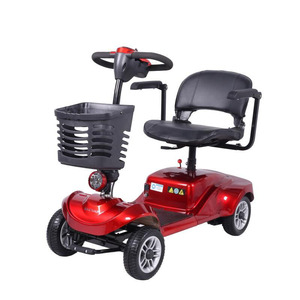
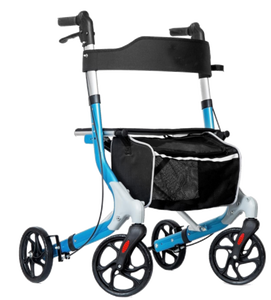
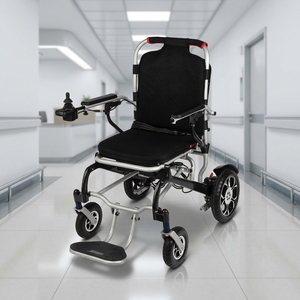
An authoritative breakdown of shifting market demands, powertrain transformations, structural ergonomics, and regulatory standards for international OEM buyers.
The global personal mobility industry is rapidly phasing out legacy lead-acid batteries in favor of High-Density Lithium-Ion (LiFePO4) chemistry coupled with high-efficiency 5kW AC brushless drive motors.
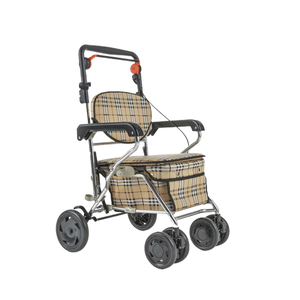
Modern OEM manufacturing demands versatile chassis frames capable of transitioning between senior shopping walkers, powered wheelchairs, and multi-passenger LSVs (Low-Speed Vehicles).
Enterprise buyers for golf resorts, retirement communities, and municipal facilities require real-time vehicle monitoring, digital dashboards, and predictive maintenance tracking.
Insights for global procurement officers, medical equipment distributors, and private-label importers navigating supply chain shifts.
As demographics shift toward an aging global population paired with expanding micro-mobility infrastructure in urban centers, the procurement requirements for personal mobility carts have evolved from simple commodity sourcing to strategic OEM partnering. Distributors who align with certified, R&D-heavy manufacturing exporters gain significant market dominance.
Global buyers face increasingly stringent regulatory barriers. Future-proof procurement requires factories with pre-validated compliance across CE (European Conformity), FDA (510k), MDR (Medical Device Regulation), and DOT/LSV street-legal safety standards. Sourcing pre-tested platforms dramatically reduces market entry timelines.
Off-the-shelf white-label products struggle with margin erosion. The industry shift favors contract factories offering custom tooling, bespoke frame geometries, proprietary colorways, and custom software UI configurations tailored specifically to regional dealer channels.
Importers are prioritizing post-sale operational efficiency. A modular component philosophy—where controller boxes, motor drives, shock absorbers, and brake assemblies are standardized across 2-passenger, 6-passenger, and rollator product lines—slashes regional spare part inventory holding costs by up to 45%.
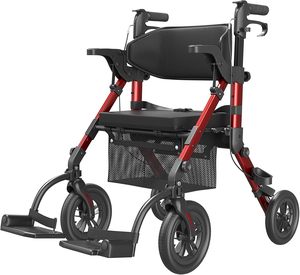
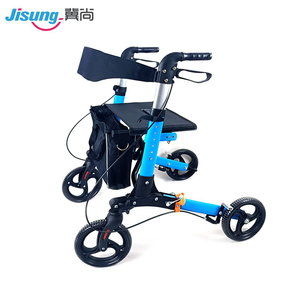
Consumer intent mining reveals a skyrocketing demand for hybrid products. Single-purpose devices are being replaced by dual-capability designs—such as rollator walkers that transform into transport chairs or heavy-duty power wheelchairs equipped with detachable utility trailers and veterinary rehabilitation attachments.
Deeply rooted in over seven decades of combined mobility engineering expertise, our modern production facility sets the global benchmark for chassis reliability, electronics integration, and export quality control.
Our engineering leadership consists of industry veterans who have developed, tested, and commercialized benchmark cart platforms globally. We engineer complete vehicles—from initial 3D CAD modeling and finite element analysis (FEA) to final chassis jig welding and CAN-bus programming—ensuring zero reliance on third-party catalog compromises.
Every mobility cart leaving our assembly line undergoes rigorous performance validation. This includes 100% electronic load testing, dynamic hill-climb holding checks, saltwater spray corrosion testing, dynamic suspension endurance cycles, and automated battery BMS cell-balance screening before final protective packaging.
We provide comprehensive end-to-end support for foreign importers, including SKD (Semi-Knocked Down) and CKD (Completely Knocked Down) shipping configurations to optimize container freight costs. Furthermore, our dedicated technical support desk offers itemized master parts catalogs, wiring schematics, and live service training.
Clear, direct answers regarding production lead times, minimum order quantities (MOQs), customization capabilities, and warranty structures.
Our standard MOQ for specialized OEM customized colors, logos, and frame adjustments is 20 units (or one 20ft container equivalent). Standard white-label configurations can be ordered starting at 10 units. Typical mass-production lead times range between 25 to 35 calendar days following final sample validation and deposit confirmation, depending on specific electrical motor and battery customization requirements.
We provide an industry-leading manufacturer warranty package: a Lifetime Frame Structural Guarantee, a 10-Year Limited Warranty on Lithium-Ion (LiFePO4) Battery Packs, and a 3-Year Bumper-to-Bumper warranty covering motors, controllers, and electronic displays. For bulk orders, we ship a 2% complimentary wearing-parts kit alongside container delivery, maintaining a dedicated domestic inventory buffer to dispatch urgent warranty components via fast express air cargo.
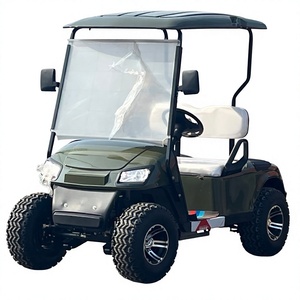
Yes. Our engineering platform is built ground-up to meet Low-Speed Vehicle (LSV) and Personal Transportation Vehicle (PTV) federal safety guidelines. We manufacture carts equipped with DOT-approved safety glass windshields, 3-point seatbelts, high-definition side/rearview mirrors, LED turn signals, horn systems, hydraulic disc braking on all four wheels, and VIN-structure compatibility necessary for local DMV registration and license plate issuance.
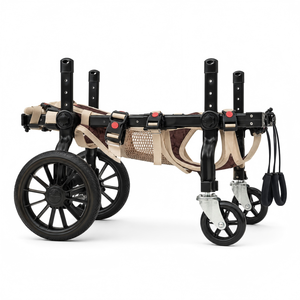
Our full-service ODM engineering team supports extensive customization: frame length expansion, elevated lifted chassis ground clearance, heavy-duty utility cargo box integrations, specialized veterinary dog-wheelchair supports, dual-passenger conversion seats, high-efficiency solar panel roofing attachments, and custom software tuning for speed caps, torque acceleration curves, and custom touchscreen startup branding.
While lead-acid options appear cheaper initially, our standard 173Ah LiFePO4 packs yield a significantly lower Total Cost of Ownership (TCO). Lithium batteries offer 3,500+ charge cycles compared to ~500 cycles for AGM/lead-acid, weigh 60% less (improving vehicle range and reducing motor wear), charge fully in 6-8 hours, and deliver consistent peak power output even when charge levels fall below 20%.
Our manufacturing plant operates strictly under ISO 9001:2015 Quality Management Systems and ISO 13485 (Medical Devices Quality Management). Our personal mobility products hold CE certification (EN 12184 / ISO 7176 compliant), RoHS environmental compliance, UN38.3 lithium battery transport certification, and MSDS safety clearance for international ocean and air transport.
Partner directly with an established OEM/ODM factory. Contact our engineering and export team today for technical catalogs, bulk pricing quotes, or to schedule an online factory tour.