
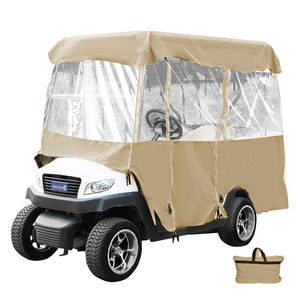
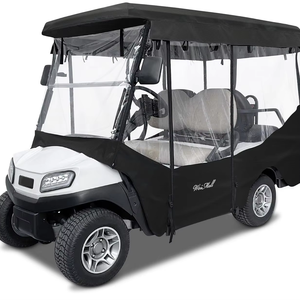
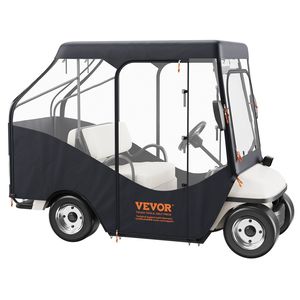
Founded by veterans with over seven decades of combined technical experience in vehicle engineering, platform homologation, and protective system development, our manufacturing facility stands as a premier OEM/ODM supplier for global commercial distributors, resort fleets, and retail brands.
Unlike standard catalog importers that rely on off-the-shelf, universal dimensions, our engineering methodology treats cart enclosures as integrated functional components. We analyze where standard enclosures fail—stress-point tearing, window yellowing, zipper seam separation, and air drag instability—and re-engineer every structural detail from the ground up.
Every enclosure design is validated on physical chassis platforms in our own facility. Rigorous hydrostatic pressure testing ensures absolute waterproofing under extreme downpours.
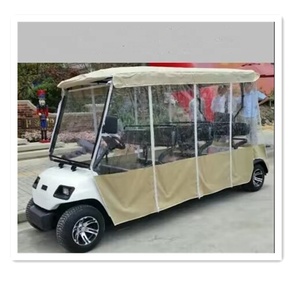
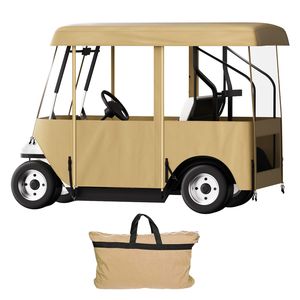
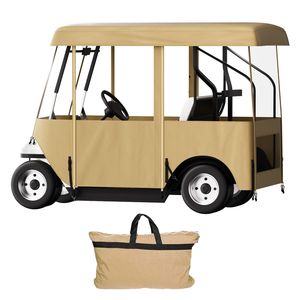
3D laser body scanning eliminates sag, flapping noise, and wind resistance, providing an exact tailored fit for EZGO, Club Car, Yamaha, LVTONG, Atlas, and custom utility vehicles.
By streamlining component sourcing and maintaining strategic raw material reserves (600D solution-dyed polyester, optical TPU, marine zippers), we guarantee accelerated OEM prototyping turnarounds.
The global personal transportation vehicle (PTV) and low-speed vehicle (LSV) markets are undergoing a significant shift toward higher-durability, automotive-grade accessories. B2B buyers must navigate key material evolutions to maximize ROI and end-user satisfaction.
Traditional piece-dyed polyester fabrics suffer from severe UV fading within 6 to 12 months. Modern commercial specifications demand Solution-Dyed Polyester (SDP), where color pigments are injected during polymer extrusion. 600D SDP offers 3x higher tensile strength and maintains colorfastness up to 1,500 UV hours, making it the benchmark for premium rental fleets.
Standard PVC window panels tend to cloud, crack, and stiffen when exposed to freezing temperatures (sub-zero weather) or extended UV exposure. Next-generation enclosures incorporate 0.75mm Thermoplastic Polyurethane (TPU). TPU remains ultra-flexible down to -30°C, provides 98% optical transparency, and resists scratch hazing over years of deployment.
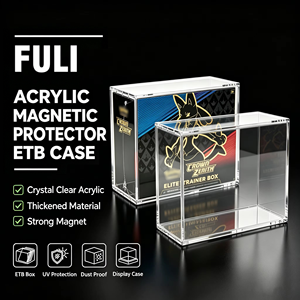
Beyond textile covers, high-value asset protection (such as specialized cart electronics, collectible display boxes, and custom instrumentation) relies on precision-molded 4mm to 6mm virgin acrylic. Engineered with N52 magnetic enclosures and 99.5% UV spectrum cutoffs, these cases prevent degradation from sunlight and mechanical impact.
To assist commercial procurement officers and fleet managers in specifying the optimal enclosure build for their operating climate and vehicle class, the matrix below outlines standardized technical parameters:
| Specification Parameter | Standard Commercial (300D) | Heavy-Duty Industrial (420D/600D) | Extreme Marine Grade (600D SDP) |
|---|---|---|---|
| Hydrostatic Head (Waterproof) | 1,500 mm H2O | 3,000 mm H2O | 5,000+ mm H2O (PU Coated) |
| UV Resistance Rating | 300 Hours (AATCC 16) | 800 Hours (AATCC 16) | 1,500+ Hours (ISO 105-B02) |
| Window Film Material | 0.50mm Pressed PVC | 0.75mm Cold-Crack PVC | 0.75mm Optical Grade TPU |
| Zipper & Fastener Hardware | #8 Nylon Coil Zippers | #10 Heavy Duty Resin | Cadmium-Coated Rust-Proof #10 |
| Seam Construction | Single-Stitched Folded | Double-Stitched Taped | Sonic-Welded Heat-Sealed Seams |
| Recommended Deployment | Mild Climate / Seasonal Golf | Year-Round Resort Fleets | Extreme Coastal & Commercial Use |
As golf carts evolve from course-only buggies into multi-passenger Personal Transportation Vehicles (PTVs) and street-legal Low-Speed Vehicles (LSVs), enclosure procurement strategies are fundamentally changing:
Fleet operators no longer want to swap entire enclosures seasonally. Future trends favor modular systems with removable side curtains, magnetic roll-up doors, and interchangeable solar-reflective roofs.
Global environmental regulations are driving demand for GRS-certified (Global Recycled Standard) recycled polyester textiles and phthalate-free TPU windows, reducing the carbon footprint of commercial fleets.
Rather than relying on aftermarket universal covers, vehicle OEMs are integrating custom attachment points (such as concealed channel tracks and quick-snap roof clips) directly into vehicle frames during factory assembly.
We provide complete end-to-end original equipment manufacturing services tailored to your technical drawings or reverse-engineered samples:
For custom OEM/ODM fabric enclosures tailored to specific vehicle models or custom dimensions, our standard MOQ starts at 100 units per model/color specification. For stocked standard sizes (such as universal 2-seater or 2+2 4-seater 300D/600D models), we support smaller trial orders starting at 20 units. Custom acrylic display cases have flexible MOQs depending on sheet thickness and magnetic lid customization.
We utilize 3D laser digitizing on factory chassis from Club Car (DS, Precedent, Tempo), EZGO (TXTV, RXV, Liberty), Yamaha (Drive, Drive2), LVTONG, Atlas, and Icon. This produces exact digital cutting markers, eliminating excessive loose fabric and preventing wind turbulence tearing during high-speed vehicle operation.
The "D" stands for Denier, measuring the linear mass density of the fabric threads. 300D is lightweight and economical, ideal for seasonal storage and light weather protection. 420D Oxford offers improved tear resistance for rental fleets. 600D Heavy-Duty polyester is the commercial industrial standard, offering maximum burst strength, extreme abrasion resistance, and long-term weatherproofing.
Yes. Street-legal LSVs require functional turn signals, headlights, taillights, side mirrors, and license plate displays. Our technical engineering team designs specialized transparent window cutouts and zippered access panels so that all safety-critical lighting and mirrors remain fully visible and operational while the enclosure is secured.
We formulate our clear panels with optical-grade Thermoplastic Polyurethane (TPU) or cold-crack inhibited PVC containing anti-UV chemical stabilizers. Our premium TPU panels pass cold-impact testing down to -30°F (-34°C) without fracturing and maintain optical transparency under intense solar radiation.
Sample prototyping typically takes 7 to 10 working days following CAD drawing sign-off. Full mass production lead times generally range between 25 and 35 days, depending on material specifications and order volume. Expedited production slots are available for strategic fleet partners.
Elevate your product line with precision-engineered 300D/600D rain enclosures, drivable covers, and acrylic display solutions. Contact our OEM/ODM engineering specialists today to request technical specifications, material swatches, or a competitive quotation.
Send an Inquiry