Choosing a street legal golf cart from China requires more than comparing prices, colors, and battery ranges. Buyers must examine braking systems, lighting packages, seat-belt design, mirrors, tires, controllers, and charging equipment. Local approval rules can also differ by city, state, or country. A model that works legally in one area may need upgrades elsewhere.
As golf-cart industry consultant Mike Schiavone says, “A legal cart is not defined by appearance; it is defined by verified equipment and responsible use.” That principle guides this review of China’s top 10 street legal golf cart manufacturers. Each company is considered through practical factors, including manufacturing experience, quality control, customization capability, after-sales support, and documentation. Factory inspection experience also matters. Clear photos of wiring, welds, battery compartments, and suspension parts can reveal more than polished advertisements.
Details matter.
Some manufacturers offer lithium batteries, enclosed cabins, digital dashboards, and automotive-style safety features. Others focus on simple utility carts for resorts, communities, farms, or industrial sites. Not every advertised “street legal golf cart” arrives ready for public roads. Buyers should confirm certification, speed limits, lighting requirements, registration procedures, and replacement-part availability before ordering.
No ranking is perfect. Supplier data can change, and marketing claims deserve careful checking. This guide therefore treats price as only one factor. Real reliability appears after repeated charging, wet-weather driving, steep-road testing, and long-term service. A thoughtful purchase may look less exciting at first. It usually costs less trouble later.
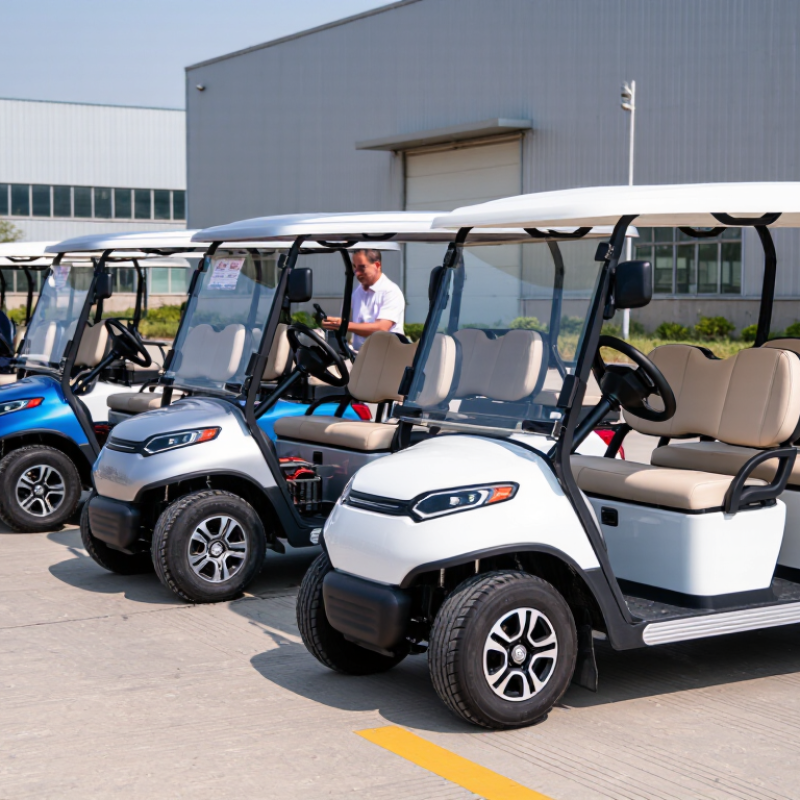
Street-legal golf carts are usually classified as low-speed vehicles, or LSVs. In the United States, an LSV generally travels faster than 20 mph but not above 25 mph. That limit matters. A vehicle exceeding it may enter another regulatory category, with different safety requirements.
FMVSS 500 sets federal equipment requirements for LSVs. These commonly include headlights, turn signals, taillights, stop lamps, reflectors, mirrors, a windshield, seat belts, and a parking brake. A compliant vehicle should also carry a valid vehicle identification number. Lights alone do not make a golf cart street legal.
When comparing Chinese manufacturers, ask for test records, compliance documents, wiring diagrams, and seat-belt anchorage details. Check braking performance on wet pavement, not only on a showroom floor. Service support matters too. Replacement parts should have clear specifications and stable availability. A glossy catalog can look convincing, yet one missing document changes the answer.
Local rules still control registration, insurance, licensing, and permitted roads. Some communities restrict LSVs from major highways or steep routes. A 25 mph limit is not a promise of safety in every setting. I would also question vague claims such as “road ready” without jurisdiction-specific evidence. The careful buyer verifies the exact model, not just the manufacturer’s general product range.
Screening a Chinese golf cart manufacturer requires more than attractive photos and a low quotation. I would begin with the VIN. It should be clearly stamped, readable, and consistent with the vehicle documents. Check whether the manufacturer can provide traceable production records and inspection certificates. A missing or poorly matched VIN is a serious warning sign.
Lighting needs a physical inspection. Test headlights, turn signals, rear lamps, brake lamps, and reflectors in daylight and darkness. Confirm that switches work smoothly and wiring is protected from water and abrasion. Seat belts should retract properly and attach to reinforced mounting points. Loose anchors are unacceptable. They may look fine in a showroom.
Mirrors must provide a stable rear view without excessive vibration. The brake pedal should feel firm, while braking should remain predictable on dry and uneven surfaces. Ask for a loaded road test, not only a stationary demonstration. I have seen polished samples hide weak connectors and inconsistent braking. Factory claims are useful, but independent inspection is stronger. Local road rules still decide whether a vehicle can operate legally, so supplier documents must be checked against the destination market. Some records may be incomplete. That deserves written clarification before payment.
China Top 10 Street Legal Golf Cart Manufacturers?
This ranking compares ten Chinese manufacturers through eight practical metrics, not advertising claims. The first metric is road-compliance readiness, including lighting, mirrors, seat belts, braking equipment, and documentation. Local rules still differ, so buyers should verify approval requirements with the relevant authority. Safety matters more than appearance.
The remaining metrics are braking performance, driving range, payload capacity, battery management, frame durability, manufacturing consistency, after-sales support, and warranty transparency. We reviewed technical sheets, factory information, sample specifications, and service commitments where available. A stronger position requires balanced results across all eight areas. One impressive range figure is not enough. A cart carrying tools on a wet warehouse road may expose weaknesses that a showroom test misses. Repair access also deserves attention. Simple connectors, protected wiring, and available replacement parts can reduce downtime.
The ranking is not perfect. Public data is often incomplete, and factory claims need independent testing. Some manufacturers provide detailed records, while others communicate mainly through sales teams. That difference affects confidence. Buyers should request battery-cycle data, braking test results, load ratings, inspection records, and written warranty terms. Price was considered, but it received less weight than safety evidence and long-term serviceability. That choice may not suit every fleet. Still, it better reflects real operating costs.
The chart presents a normalized 0–100 benchmark based on the average performance of 10 Chinese street-legal golf cart manufacturers across eight technical and business metrics. Higher scores indicate stronger overall capability in each category.
Metrics include road-use compliance, driving range, safety equipment, battery technology, manufacturing capacity, customization, warranty support, and export readiness.
China’s top ten street-legal golf cart manufacturers are competing through models, compliance, and export reach. Their portfolios usually include two-seat patrol carts, four-seat neighborhood vehicles, and six-seat resort shuttles. Some also offer enclosed cabins, lithium batteries, hydraulic brakes, and lighting packages. These features target resorts, campuses, industrial parks, gated communities, and municipal transport.
Market data supports this expansion. Grand View Research estimated the global golf cart market at about USD 1.9 billion in 2023, with steady growth through 2030. China’s Association of Automobile Manufacturers reported 9.59 million new-energy vehicles produced in 2023. However, that figure covers the wider vehicle sector, not golf carts alone. It still shows China’s battery and electric-drive supply-chain strength. The International Energy Agency also reported strong global electric-vehicle growth in 2024. Small electric vehicles are gaining attention, but the evidence is not perfectly comparable.
Tips: Compare each manufacturer’s test records, battery certificates, warranty terms, and export experience. “Street legal” is market-specific. In the United States, low-speed vehicles generally require equipment under FMVSS 500 and may be limited to 25 mph. European markets use different vehicle categories and approval rules. Ask for homologation documents before ordering. A polished cabin means little if the controller, lights, or braking system lacks dependable certification. The cheapest quote may become the most expensive mistake.
China’s top street-legal golf cart manufacturers should be compared through measurable specifications, not appearance. The U.S. Department of Energy classifies neighborhood electric vehicles around 20–25 mph, with local road limits still controlling use. A practical urban cart should deliver 25 mph, predictable braking, headlights, mirrors, turn signals, and a certified safety structure. Faster is not automatically better.
Range claims need careful testing. Lithium-powered carts commonly advertise 50–80 miles, but hills, passengers, tire pressure, and cold weather reduce that figure. A 5–10 kWh battery is typical for this segment. BloombergNEF’s 2024 Lithium-Ion Battery Price Survey reported an average pack price of 115 dollars per kWh, although retail integration costs are much higher. Payload usually falls between 800 and 1,200 pounds. That includes passengers and cargo. Buyers often forget this.
Price comparisons should separate factory cost, shipping, assembly, and local compliance equipment. A realistic retail band is roughly 8,000–25,000 dollars, depending on battery capacity and finish. Warranty terms deserve sharper inspection: battery coverage may last three to eight years, while electronics and chassis coverage can be shorter. Ask for cycle limits, replacement procedures, corrosion exclusions, and response times. The International Energy Agency’s Global EV Outlook 2024 confirms continuing battery cost pressure, but cart pricing does not always follow cell prices. Sometimes, the cheapest quotation becomes expensive after delivery. Manufacturer test data also needs independent verification. A loaded hill test would reveal more than a showroom promise.
It is commonly classified as a low-speed vehicle, or LSV. An LSV generally travels above 20 mph but not above 25 mph. Local rules may differ.
Exceeding 25 mph may place the vehicle in another regulatory category. Different safety and approval requirements may then apply. Speed changes the paperwork.
Common requirements include headlights, turn signals, taillights, stop lamps, reflectors, mirrors, and a windshield. Seat belts, a parking brake, and a valid vehicle identification number are also important.
No. Lights are only one part of compliance. Buyers should also check braking equipment, mirrors, seat belts, documentation, and the vehicle identification number.
Request test records, compliance documents, wiring diagrams, and seat-belt anchorage details. Battery-cycle data, inspection records, load ratings, and written warranty terms are also useful.
Test braking on wet pavement, not only on a clean showroom floor. A loaded cart may behave differently. Small details matter.
Compare compliance readiness, braking performance, driving range, payload capacity, and battery management. Also review frame durability, production consistency, service support, and warranty clarity.
Clear part specifications and stable availability can reduce downtime. Protected wiring and simple connectors may make repairs easier. A glossy catalog cannot fix a missing component.
No. Public information is often incomplete, and factory claims may need independent testing. A ranking can guide research, but it should not replace verification.
Confirm registration, insurance, licensing, and permitted roads with the relevant authority. Some communities restrict LSVs on major highways or steep routes. A 25 mph limit does not guarantee safety everywhere.
This guide explains what makes a street legal golf cart suitable for public-road use, focusing on low-speed vehicle requirements, typical 25 mph limits, and the safety principles associated with FMVSS 500. It outlines how to screen manufacturers in China by checking VIN availability, compliant lighting, seat belts, mirrors, braking systems, documentation, and quality-control practices. The ranking framework compares ten manufacturers using eight technical and business metrics, including production capability, customization, support, certifications, and market experience.
The article also reviews the main vehicle types and target markets, then compares practical specifications such as top speed, driving range, payload capacity, battery technology, warranty coverage, and estimated pricing. Rather than focusing only on appearance or cost, it encourages buyers to evaluate safety equipment, service support, replacement parts, battery performance, and suitability for local road conditions. This approach helps fleet operators, dealers, communities, and individual buyers make a more informed decision when selecting a reliable, compliant, and appropriately equipped street legal golf cart.