0%

Selecting a 5kW AC electric motor seems straightforward until real operating conditions appear. A factory in Germany may require 400 V and 50 Hz, while a Canadian facility may need 460 V and 60 Hz. Pump rooms add moisture, dust, and sudden temperature changes. Conveyor lines demand steady torque and frequent starts. These details can quickly change the best choice.

Nikola Tesla, a pioneer of alternating-current engineering, wrote, “The present system of alternating currents is not the result of a momentary inspiration, but of a long and laborious evolution.” His words remain relevant. Motor selection depends on careful matching, not attractive catalog numbers. A reliable comparison must examine efficiency class, rated speed, starting current, power factor, insulation, enclosure protection, mounting style, and compatibility with variable-frequency drives. Small differences matter.

This guide reviews ten 5kW AC electric motor options for global buyers. It considers practical installation issues, including terminal-box access, bearing service, shaft dimensions, and noise near operators. Certification and documentation also deserve attention, especially for international procurement. A low purchase price may become expensive after rewiring, customs delays, or premature bearing failure. No ranking can fit every factory. That limitation matters. Even experienced buyers can overlook ambient heat or a poorly sized starter. The selections here offer useful comparison points, not an automatic answer. Before ordering, confirm the duty cycle, supply voltage, frequency, load profile, and local compliance requirements with a qualified engineer.
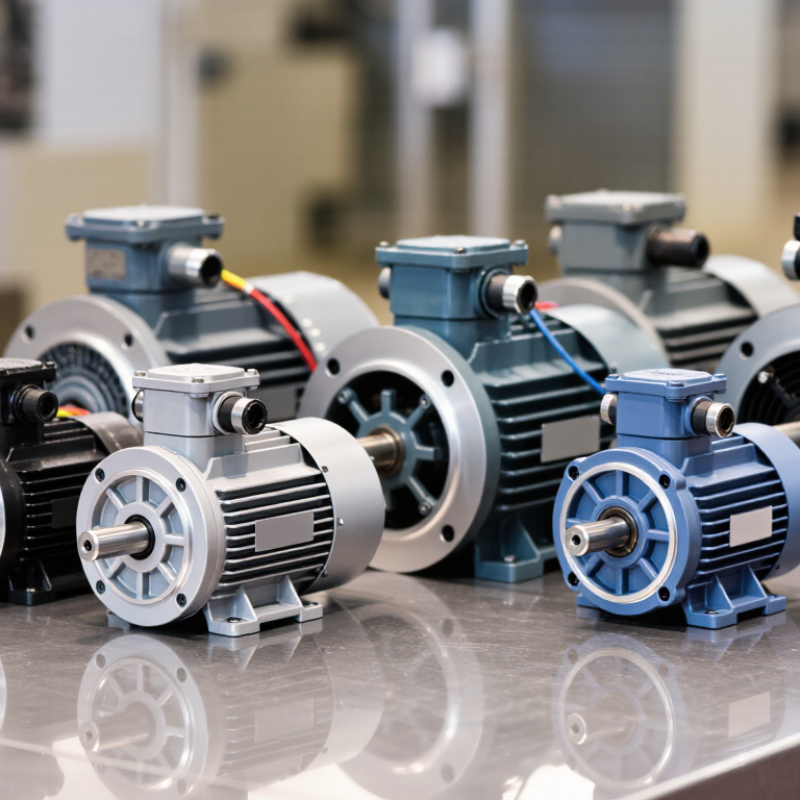
Top 10 5kW AC Electric Motors for Global Buyers

What Defines a 5kW AC Electric Motor for Global Applications

A 5kW AC electric motor is defined by more than its power rating. The rating usually describes mechanical output, while electrical input is higher because of losses. For global applications, voltage, phase, and frequency must match the local supply. A 400V, 50Hz motor may not perform correctly on a 230V, 60Hz system. Rated speed, starting torque, and duty cycle also shape real performance. A conveyor needs different torque behavior than a pump or fan. Small mismatch, serious trouble.

Reliable selection starts with the load, not the catalog image. Measure running current, startup demand, shaft load, ambient temperature, and operating hours. An IE efficiency class can reduce energy waste, but efficiency changes with load. An IP55 enclosure may suit dusty indoor machinery, yet outdoor exposure can require stronger protection. Insulation class, cooling method, bearings, and service access affect long-term reliability. I have seen motors selected correctly on paper but poorly ventilated in practice. That detail is easy to miss. A margin is useful, but oversizing can reduce efficiency and increase purchase cost.

Tips: Compare nameplate data with actual site conditions before ordering. Ask for efficiency curves, temperature-rise data, and test records. Confirm mounting dimensions, shaft size, terminal position, and replacement parts. Keep one fact in mind. A 5kW motor is not automatically universal. I would not treat a neat specification sheet as complete evidence. Performance depends on installation, maintenance, and the real load profile.

Top 10 5 kW AC Electric Motor Configurations for Global Buyers

What Defines a 5 kW AC Electric Motor for Global Applications?

This chart compares ten common supply configurations used for 5 kW three-phase and single-phase AC motors in global industrial applications. Estimated full-load current is calculated from a 5,000 W rated output, 89% efficiency, and 0.84 power factor.

Formula: three-phase current = 5,000 ÷ (√3 × voltage × efficiency × power factor); single-phase current = 5,000 ÷ (voltage × efficiency × power factor). Actual nameplate current varies by motor design, duty cycle, temperature, and operating conditions.

Key Motor Types and Performance Factors to Compare

For a 5kW AC motor, type selection should match the machine, duty cycle, and local power supply. Three-phase squirrel-cage induction motors remain practical for pumps, conveyors, compressors, and fans. They are durable, cost-aware, and easy to maintain. Wound-rotor designs can support high starting torque, while synchronous motors improve speed stability under steady loads. Permanent-magnet motors may deliver higher efficiency, but their controllers and servicing requirements need closer review.

Variable-frequency-drive motors suit applications requiring adjustable speed, such as mixers or ventilation systems. Servo-style AC motors offer precise positioning, although they may exceed the needs of simple rotating equipment. Brake motors help stop loads quickly. Geared motors increase output torque at lower speed. Inverter-duty construction is valuable when frequent speed changes create extra insulation stress. Enclosed, cooled housings also protect windings in dusty workshops.

Performance comparisons should include rated voltage, frequency, full-load current, efficiency class, torque curve, insulation rating, and enclosure protection. Check the starting method carefully. A motor that starts well without a load may struggle with a full conveyor.

Small details matter.

Measure shaft diameter, mounting dimensions, bearing noise, and terminal-box access before ordering. In field inspections, a quiet motor can still run hot because of poor alignment or insufficient airflow. I have found datasheet comparisons useful, but they are not perfect substitutes for load testing. Ambient temperature, altitude, duty cycle, and voltage fluctuations can change real-world performance. Ask for test records and clear certification documents for the destination market.

Top 10 5kW AC Electric Motors for International Buyers

For international buyers, the top 10 5kW AC electric motors should be judged by operating conditions, not catalogue appearance. A reliable selection starts with voltage, frequency, phase, mounting style, and shaft dimensions. A 400V, 50Hz motor may not suit a 460V, 60Hz installation. Check carefully.

The strongest candidates usually combine high efficiency, low vibration, durable bearings, and an IP-rated enclosure. Cast-iron housings suit demanding factory floors, while lighter housings simplify handling during installation. Insulation class, temperature rise, starting current, and duty rating also deserve attention. Ask for test reports, wiring diagrams, dimensional drawings, and clear performance curves. These documents reduce costly surprises at customs and on site. Confirm that the motor’s certification matches the destination market.

Real-world testing matters more than polished specifications. Run the motor with its intended pump, fan, or conveyor load. Measure current, noise, temperature, and vibration after several hours. Small details matter. A loose terminal, poor packing, or missing spare bearing can delay a project across borders. I would not rank efficiency alone as the deciding factor. It can hide weak starting performance or limited service support. International buyers should compare warranty terms, replacement parts, communication speed, and local technical assistance. Even the best motor becomes a poor purchase when installation guidance is unclear.

Global Standards, Voltage Options, and Installation Requirements

Top 10 5kW AC Electric Motors for Global Buyers

A 5kW AC motor delivers about 6.7 horsepower, but its performance depends on the local electrical system. Global buyers should compare motors built to IEC or NEMA requirements. These standards help clarify dimensions, efficiency, testing, and safety expectations.

Common voltage options include 230V, 400V, and 460V, with 50Hz or 60Hz frequencies. A 400V, 50Hz motor may not operate correctly on a 460V, 60Hz supply. Always check the nameplate before ordering. IE3 or IE4 efficiency ratings can reduce energy use, while IP55 protection suits many dusty industrial areas. Wet or corrosive locations may require stronger protection. That detail is often missed.

Tips: Confirm phase type, rated current, frame size, shaft dimensions, and rotation direction. Use an overload relay, correct cable sizing, and reliable grounding. Installers should verify local electrical codes before energizing the motor. For variable-speed operation, confirm inverter compatibility and cooling performance. Leave enough space around the housing for airflow and maintenance access.

A 5kW motor also needs suitable starting equipment. Direct-on-line starting may create a high inrush current. Soft starters or drives can reduce mechanical stress, though they add cost and setup work. In practice, voltage matching is not enough. Installation conditions can change the final choice. I would recheck the duty cycle, ambient temperature, and load torque before approving any purchase.

Top 10 5kW AC Electric Motors for Global Buyers - Global Standards, Voltage Options, and Installation Requirements

Representative 5kW three-phase induction-motor configurations ranked by application suitability. Final electrical, dimensional, and certification details must be confirmed against the selected motor's nameplate and technical datasheet.

Rank Typical Motor Configuration Rated Output Frequency & Rated Voltage Options Nominal Speed Typical Efficiency Class Power Factor Enclosure & Insulation Typical IEC Frame / Mounting Applicable Standards Recommended Applications Key Installation Requirements
1 Four-pole general-purpose motor
Balanced speed and torque for continuous industrial service
5.0 kW
6.7 hp
50 Hz: 220–240 V or 380–415 V
60 Hz: 220–277 V or 440–480 V
Three-phase
Approximately 1,450 rpm at 50 Hz
Approximately 1,750 rpm at 60 Hz
IE3 or IE4
Typical full-load efficiency: about 88.5–90%
Approximately 0.80–0.86 IP55 minimum typical
Class F insulation
S1 continuous duty
IEC 132S or 132M, depending on design
Foot-mounted B3; flange versions commonly B5 or B35
IEC 60034-1
IEC 60034-30-1
IEC 60072
IEC 60529
Pumps, fans, conveyors, compressors, machine tools, and general production equipment Use a correctly rated motor-protection circuit breaker or overload relay. Provide protective earth, suitable cable glands, and ventilation clearance around the frame.
2 Four-pole high-efficiency motor
Lower operating losses for long annual running hours
5.0 kW
6.7 hp
50/60 Hz
220–240 V, 380–415 V, or 440–480 V
Three-phase
Approximately 1,450 rpm at 50 Hz
Approximately 1,750 rpm at 60 Hz
IE4 preferred
Typical full-load efficiency: about 90–92%
Approximately 0.82–0.88 IP55 or IP56
Class F insulation
S1 continuous duty
IEC 132S or equivalent frame
B3, B5, or B35 mounting
IEC 60034-1
IEC 60034-2-1
IEC 60034-30-1
IEC 60529
HVAC systems, water treatment, process pumps, fans, and energy-conscious industrial plants Check that the starter or variable-frequency drive is compatible with the motor's efficiency class. Follow the manufacturer's minimum switching frequency and cable-length requirements when using a drive.
3 Four-pole inverter-duty motor
Designed for adjustable-speed operation
5.0 kW
6.7 hp
50/60 Hz base frequency
Common supply options: 380–415 V or 440–480 V
Three-phase
Approximately 1,450 rpm at 50 Hz
Speed controlled above or below base speed by VFD
IE3 or IE4
Efficiency varies with operating speed and load
Approximately 0.80–0.87 IP55 typical
Class F or H insulation system
S1 duty; thermal protection recommended
IEC 132S or 132M
B3, B5, or B35 mounting
Optional encoder or forced ventilation
IEC 60034-1
IEC 60034-17
IEC 60034-25
IEC 60529
Speed-controlled conveyors, mixers, extruders, pumps, fans, and automated machinery Use shielded VFD cable, 360-degree shield termination where required, proper grounding, and a drive output filter when cable length or motor insulation limits require it.
4 Two-pole high-speed motor
High rotational speed with compact power transmission
5.0 kW
6.7 hp
50 Hz: 220–240 V or 380–415 V
60 Hz: 220–277 V or 440–480 V
Three-phase
Approximately 2,900 rpm at 50 Hz
Approximately 3,500 rpm at 60 Hz
IE3 or IE4
Typical full-load efficiency: about 87–90%
Approximately 0.84–0.90 IP55 typical
Class F insulation
S1 continuous duty
IEC 132S or a high-speed equivalent
B3, B5, or B35 mounting
IEC 60034-1
IEC 60034-30-1
IEC 60072
IEC 60529
High-speed fans, centrifugal pumps, blowers, polishing equipment, and compact machinery Check coupling balance, shaft speed limits, bearing suitability, and driven-equipment overspeed limits. Use a rigid, accurately aligned foundation.
5 Six-pole high-torque motor
Lower speed and higher shaft torque for demanding loads
5.0 kW
6.7 hp
50 Hz: 220–240 V or 380–415 V
60 Hz: 220–277 V or 440–480 V
Three-phase
Approximately 975 rpm at 50 Hz
Approximately 1,170 rpm at 60 Hz
IE3 or IE4
Typical full-load efficiency: about 86–89%
Approximately 0.76–0.84 IP55 typical
Class F insulation
S1 continuous duty
IEC 132M or larger frame depending on torque design
B3, B5, or B35 mounting
IEC 60034-1
IEC 60034-30-1
IEC 60072
IEC 60529
Low-speed conveyors, crushers, agitators, hoists, material-handling systems, and positive-displacement pumps Verify starting torque, acceleration time, inertia, and overload capacity. A soft starter or VFD may be required to limit starting current and mechanical shock.
6 Eight-pole low-speed motor
High torque at reduced direct-drive speed
5.0 kW
6.7 hp
50 Hz: 220–240 V or 380–415 V
60 Hz: 220–277 V or 440–480 V
Three-phase
Approximately 730 rpm at 50 Hz
Approximately 875 rpm at 60 Hz
IE3 or IE4
Typical full-load efficiency: about 83–87%
Approximately 0.70–0.80 IP55 typical
Class F insulation
S1 continuous duty
IEC 132M, 160M, or equivalent
Frame size depends on torque and thermal design
IEC 60034-1
IEC 60034-30-1
IEC 60072
IEC 60529
Slow conveyors, aerators, mixers, winches, and applications where gearbox reduction is undesirable Allow for the larger frame and higher starting current that may accompany low-speed designs. Confirm foundation dimensions, shaft height, and driven-load torque curve before installation.
7 Brake motor configuration
Motor with spring-applied, electrically released holding brake
5.0 kW
6.7 hp
50/60 Hz
Common motor supplies: 380–415 V or 440–480 V
Brake coil voltage must be specified separately
Usually approximately 1,450 rpm at 50 Hz for a four-pole design IE3 typical
Brake losses are additional to motor losses
Approximately 0.80–0.86 IP55 motor enclosure typical
Class F insulation
S1 motor duty
Brake rating commonly specified in N·m
IEC 132S or 132M
B3, B5, or B35 mounting
Brake release and manual-release options vary
IEC 60034-1
IEC 60034-5
IEC 60072
IEC 60529
Hoists, cranes, elevators, indexing conveyors, machine tools, and positioning equipment Provide a separately protected brake supply where required. Confirm stopping time, brake torque, thermal duty, emergency-stop logic, and manual-release access.
8 Single-phase capacitor-start motor
For locations without three-phase service
5.0 kW
6.7 hp
50 Hz: 220–240 V
60 Hz: 220–240 V or 220–277 V
Single-phase
Commonly approximately 1,450 rpm at 50 Hz for a four-pole design Typically lower than equivalent three-phase designs
Confirm efficiency on the nameplate
Approximately 0.85–0.95, depending on load and capacitor design IP44 to IP55 depending on enclosure
Class F insulation
Starting capacitor and run capacitor may be required
Frame size is often larger than an equivalent three-phase motor
Foot-mounted or flange-mounted versions available
IEC 60034-1
IEC 60072
IEC 60529
Local single-phase electrical codes
Small compressors, pumps, agricultural equipment, workshops, and light industrial machinery Confirm supply current, starting capability, capacitor ratings, and voltage drop. A dedicated circuit and correctly sized overload protection are essential.
9 Washdown and high-humidity motor
Sealed construction for wet or frequently cleaned areas
5.0 kW
6.7 hp
50/60 Hz
380–415 V or 440–480 V
Three-phase
Approximately 1,450 rpm at 50 Hz for a four-pole design IE3 or IE4
Efficiency depends on sealing and thermal design
Approximately 0.80–0.87 IP66 typical
Class F insulation
Corrosion-resistant external finish
Stainless or sealed hardware may be available
IEC 132S or 132M
B3, B5, or B35 mounting
Drain plugs and sealed cable entries recommended
IEC 60034-1
IEC 60034-5
IEC 60529
IEC 60068 environmental testing may apply
Food-processing support equipment, wastewater plants, outdoor pumps, washdown conveyors, and humid environments Use hygienic or corrosion-resistant mounting hardware where required. Prevent cable-entry water paths, avoid directing high-pressure spray at seals, and provide adequate drainage.
10 Hazardous-area certified configuration
For installations where flammable gas, vapor, or dust may be present
5.0 kW
6.7 hp
50/60 Hz
Voltage selected according to the area classification
Three-phase
Typically approximately 1,450 rpm at 50 Hz for a four-pole design IE3 or IE4 where certified and available
Certification-specific thermal limits apply
Approximately 0.80–0.87 Explosion-protection type may include Ex db, Ex ec, Ex tb, or another approved method
Enclosure rating commonly IP55 or higher
IEC frame and mounting selection depends on certified construction
Frame, terminal box, and cable entries must match certification
IEC 60079-0
IEC 60079-1 or applicable protection standard
IEC 60034-1
IEC 60529
ATEX, IECEx, or local certification as required
Petrochemical facilities, paint areas, gas-handling systems, grain plants, and combustible-dust environments Match gas or dust group, temperature class, zone, EPL, ambient temperature, and cable-gland certification. Installation must be completed by qualified hazardous-area personnel.
Buyer checklist: Confirm rated voltage, frequency, current, efficiency class, power factor, service factor, starting method, duty cycle, ambient temperature, altitude, enclosure rating, mounting dimensions, shaft details, terminal-box position, certification requirements, and local electrical-code compliance before ordering or installing any 5kW AC motor.

How to Select the Right 5kW AC Motor for Your Application

Top 10 5kW AC Electric Motors for Global Buyers

How to Select the Right 5kW AC Motor for Your Application

A 5kW AC motor is not selected by power alone. Check the required speed, torque, voltage, frequency, and duty cycle. A motor running a conveyor needs different performance from one driving a pump. Record the load at startup, not only during normal operation. Starting torque can expose a poor selection quickly.

Match the motor’s enclosure to its environment. An IP55 enclosure may suit a clean factory, while dust, moisture, or washdown conditions demand stronger protection. Confirm the mounting position, shaft size, insulation class, and cooling method. If a variable frequency drive is planned, verify inverter-duty suitability and low-speed cooling performance. Small details matter.

Efficiency affects operating cost, especially under long daily shifts. Compare rated efficiency, power factor, and expected load range. A lightly loaded motor may waste energy despite its attractive nameplate. Check local voltage and frequency requirements before ordering. This is easy to overlook. I have seen technically correct motors fail in practice because the coupling, base, or starting method was ignored. Leave room for alignment errors, temperature rise, and future load changes. A careful test run, with measured current and vibration, is more reliable than assumptions.

FAQS

What motor type suits a typical 5kW pump or conveyor?

A three-phase squirrel-cage induction motor is often practical. It offers durable construction and straightforward maintenance. Check the full-load torque carefully.

When is a variable-speed motor useful?

Choose variable-speed operation for mixers, fans, or ventilation systems. A suitable drive adjusts speed smoothly. Confirm cooling performance during low-speed operation.

What specifications should international buyers compare?

Compare voltage, frequency, phase, frame size, shaft diameter, efficiency, insulation, torque, and enclosure protection. Small details matter. Dimensional drawings help.

Can a 400V, 50Hz motor run on a 460V, 60Hz supply?

Do not assume compatibility. These electrical conditions differ. Check the nameplate, controller requirements, and local installation rules before ordering.

Which enclosure protection is suitable for a dusty workshop?

An IP-rated enclosed housing can protect windings from dust. Dusty areas still need airflow and cleaning. A sealed housing may run hot.

How should starting performance be checked?

Test the motor with its actual pump, fan, or conveyor load. Measure starting current and acceleration time. An unloaded test can mislead.

Is higher efficiency always the best choice?

Not always. Starting torque, service access, cooling, and replacement parts also matter. I would not rank efficiency alone.

What installation details can prevent early motor problems?

Confirm shaft alignment, cable size, grounding, overload protection, and terminal access. Leave space around the housing. Poor airflow can cause overheating.

What documents should a buyer request?

Request test records, wiring diagrams, performance curves, dimensions, certification documents, and spare-parts information. Clear paperwork reduces delays. Datasheets are not perfect.

Conclusion

Choosing the right 5kW AC electric motor for global applications requires more than comparing power ratings. Buyers should understand how motor design, voltage, frequency, phase configuration, speed, torque, efficiency, enclosure protection, and duty cycle affect performance. Common options include induction motors, high-efficiency designs, and application-specific configurations, each suited to different loads such as pumps, fans, conveyors, compressors, and processing equipment. A practical comparison should also consider starting current, noise, heat management, maintenance needs, and operating conditions.

International installation requires careful attention to regional voltage and frequency options, electrical standards, mounting dimensions, terminal arrangements, protection ratings, and cooling methods. The best selection will match the motor’s torque curve and duty rating to the driven machine while supporting reliable operation in the intended environment. Buyers should also verify compatibility with control systems, variable-frequency drives, safety equipment, and local installation practices. By evaluating performance, efficiency, durability, serviceability, and total operating cost together, users can confidently choose a 5kW AC electric motor that delivers stable, safe, and efficient long-term operation.

Sienna

Sienna

Sienna is a seasoned marketing professional with a strong understanding of product strategy, customer needs, and digital communication. As a key contributor to the company’s content and marketing initiatives, she regularly updates the corporate website with practical, well-researched blog articles......