Buying a lifted multi passenger cart can feel simple until the options start to blur together. Seat count, lift height, tires, power, and intended terrain all affect how the cart performs. A model that looks steady on a showroom floor may feel different on a sloped path or a rough gravel driveway. Small details matter.
Lifted-cart product specialist Evan Brooks puts the buying principle this way: “Choose for the ground you drive on, not just the stance you admire.” Treat that as a practical reminder, not a substitute for checking specifications. A lifted multi passenger cart should match its expected load, route, and everyday use. Ask the seller for rated passenger capacity, tire and suspension details, braking information, and warranty coverage. Then compare those answers with how and where you plan to drive.
There is no perfect setup. More clearance can help on uneven ground, but it may change handling and ease of entry. Extra seats are useful, yet they do not automatically mean more usable cargo space. Bring your regular passengers if possible. Check whether they can climb aboard comfortably, and look at the step height, handholds, and seat layout. Take a careful test drive. Listen for rattles. Notice how it turns and stops.
A little doubt is healthy. Buyers can get distracted by oversized tires or a polished finish, and I would not pretend those details never matter. They just should not outweigh fit, stability, service access, and clear documentation. These seven tips will help you compare carts with a sharper eye and fewer assumptions.
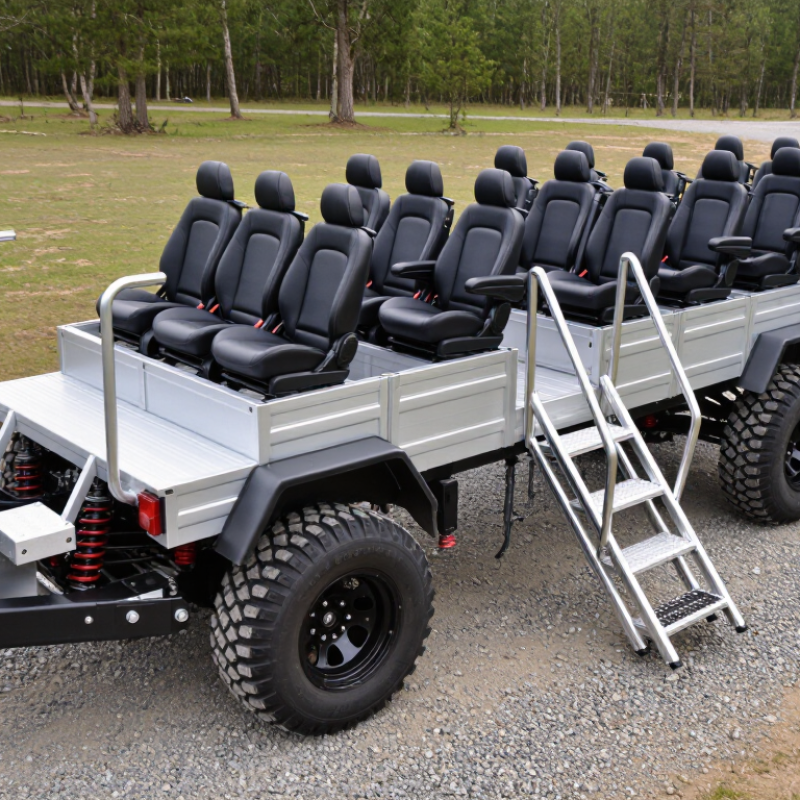
Before choosing a lifted multi-passenger cart, count the people it will carry on a typical trip, then consider occasional peak loads. Four seats do not automatically mean four adults plus bags fit within the rated payload. Weigh passengers and cargo together, including coolers, tools, or event supplies. Leave a practical margin. That part is easy to overlook.
Intended use changes the right capacity. A golf course shuttle may carry passengers and clubs over repeated short trips, while a campground cart may need room for luggage and uneven paths. The National Golf Foundation reported 28.1 million on-course golfers in 2024, a useful sign of golf’s scale, but not a measure of cart demand at any one site. Use local trip patterns instead. Ask how often the cart will climb slopes, cross soft ground, or carry a full load. A lift can change handling and clearance, so verify the cart’s payload rating, braking system, tires, and suspension with a qualified service professional. ANSI/NGCMA Z130.1 provides golf-car safety guidance; check the current edition and confirm that the proposed configuration remains within its applicable limits. Real use is messy. One more passenger can change the decision.
| Tip | Buying Tip | Define Your Needs | What to Check |
|---|---|---|---|
| 1 | Set the passenger capacity | Decide how many people need to ride at one time. Common multi-passenger layouts include four, six, and eight seats; seating arrangements vary by vehicle. | Count regular passengers, not occasional riders. Confirm the seating configuration and rated capacity on the vehicle’s specification label or documentation. |
| 2 | Calculate total payload | Include passengers, bags, tools, and other cargo. For example, four occupants at an assumed 175 lb each plus 100 lb of cargo equal 800 lb total load. | Compare your expected total load with the manufacturer’s rated payload. Passenger capacity and payload are separate limits; do not exceed either one. |
| 3 | Match the cart to its main use | Identify whether the cart is mainly for neighborhood trips, a large property, event transport, campus routes, or recreational trail use. | Consider route length, surface, traffic conditions, storage, and how often the cart will carry a full load. These factors affect the suitable size and configuration. |
| 4 | Choose lift and ground clearance carefully | A lifted setup can provide more clearance for uneven ground, but the useful amount depends on the terrain and the cart’s overall design. | Ask for the actual ground clearance and lift measurements. Check that tires, suspension, steering, and braking are compatible with the configuration. |
| 5 | Select tires for the surface | Smooth pavement, grass, gravel, and rough trails place different demands on tire tread and vehicle handling. | Choose tires suited to the surfaces you use most. Confirm tire size and clearance, and ask how the tires may affect ride comfort, steering, and energy use. |
| 6 | Check range and charging needs | Estimate the distance travelled in a typical day, including return trips, stops, hills, and time spent carrying passengers or cargo. | Compare range estimates under similar load and terrain conditions. Confirm charging time, charger requirements, and access to a suitable charging location. |
| 7 | Review safety and local requirements | Plan for safe entry and exit, secure seating, visibility, and the routes where the cart will operate. | Inspect the brakes, lights, mirrors, seat belts where fitted, and passenger handholds. Check local rules before using the cart on public roads or shared paths. |
Count typical riders, then consider occasional peak loads. Include bags, coolers, tools, and event supplies in the total weight. Leave a practical margin.
Not necessarily. Check the rated payload, which covers passengers and cargo together. Four seats do not guarantee enough carrying capacity.
A golf shuttle may carry clubs on short, repeated trips. A campground cart may need space for luggage and uneven paths. Local trip patterns matter.
Ask a qualified service professional to verify payload, brakes, tires, and suspension. A lift can change clearance and handling. Real use is messy.
Forward-facing rows offer a clear view and easier conversation with the driver. Opposing seats feel social, but knees may meet in the middle. Measure the seat gap.
Check step-in height, doorway width, and handhold placement. A low step and textured floor may help boarding feel steadier. Small details matter.
Confirm suitable ramp or lift access, securement points, and turning space. An open area alone may not be enough.
Ask regular passengers to try entry and seating. A quick showroom visit may hide awkward transfers, so take measurements and allow time for another look.
Choosing a lifted multi passenger cart starts with understanding how many people it must carry and where it will be used. Consider whether passengers need extra room for bags or equipment, then compare seating arrangements, step-in height, handholds, and other accessibility features. A layout that works well for frequent stops or passengers with limited mobility may differ from one intended for occasional group travel.
Next, assess the cart’s lift height, suspension, tires, and overall stability on the terrain you expect to encounter. Check that its powertrain and driving range suit the usual distances, slopes, and surface conditions. Before buying, also review the available safety equipment, confirm that the cart meets the rules that apply in your area, and ask about maintenance support and replacement parts. A careful comparison of these factors can help you choose a comfortable, capable cart that fits your passengers and everyday needs.