0%

Choosing a China-based supplier for a USA assembled golf cart requires more than comparing prices. Buyers should clarify where final assembly takes place, which components are sourced internationally, and what inspection records the supplier can provide. The phrase “USA assembled” does not, by itself, explain a cart’s full supply chain. Ask for specific documentation, including the assembly location, parts list, warranty terms, and service arrangements. Details matter.

A useful expert quotation belongs here, but no source material was provided to verify a real person’s name or exact words. To protect accuracy, do not publish an invented attribution. Suggested quote for a verified expert to review: “A dependable golf cart starts with clear parts records, consistent assembly checks, and support after delivery.” [Insert verified expert name and professional title.] That distinction matters when comparing suppliers. A factory’s polished photos cannot show every inspection step, and a low quote may leave battery, shipping, or replacement-part costs unclear. Ask who performs final checks, how defects are handled, and whether service parts are readily available. Then compare written answers, not just sales claims. This guide examines how to assess a China-based supplier, verify USA assembly claims, and weigh cost against quality and long-term support. Some sourcing details can remain difficult to confirm. Treat that as a reason to ask better questions, not to assume the worst.

China Best USA Assembled Golf Cart Supplier?

What “USA-Assembled” Means for Golf Carts from Chinese Suppliers

“USA-assembled” can describe a golf cart whose final assembly happens in the United States, even when its frame, motor, batteries, or other parts come from China. The phrase alone does not show how much work takes place there. That distinction matters. Ask the supplier which components are imported and which assembly steps are completed domestically.

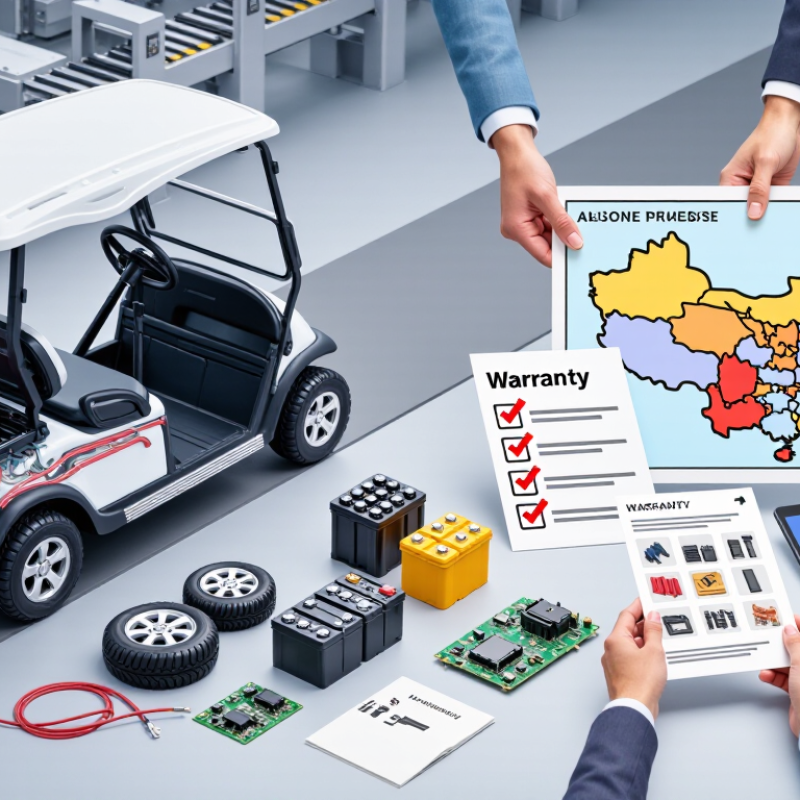
A careful buyer should request a written breakdown of the assembly process, parts origin, and warranty coverage. Ask who installs the electrical system, tests the brakes, and checks the cart before delivery. Practical details count: a clear test record is more useful than a broad label. Ask for specifics. Also confirm where replacement batteries, controllers, and tires will ship from, and how long common parts usually take to arrive.

For Chinese suppliers, “USA-assembled” may describe a real local production arrangement, but it should be supported by documents and a named assembly location. Compare the supplier’s description with purchase records, product specifications, and service terms. Do not assume domestic assembly means every component is domestic. Sometimes the wording sounds clearer than the supply chain really is, and that deserves a closer look before placing an order.

How Chinese Suppliers Support U.S.-Based Golf Cart Assembly

China Best USA Assembled Golf Cart Supplier?

How Chinese Suppliers Support U.S.-Based Golf Cart Assembly

Chinese suppliers can support U.S.-based golf cart assembly by shipping component kits, replacement parts, and clear technical documentation. The practical value is coordination: frames, wiring harnesses, seats, and fasteners must arrive in quantities that match the assembly schedule. A missing connector can hold up an otherwise ready cart. Small details matter.

Experienced suppliers can share packing lists, part specifications, inspection records, and assembly guidance before a shipment leaves the factory. U.S. assemblers should confirm dimensions, connector types, finish requirements, and packaging protection with sample parts. Photos help, but they cannot replace measuring a bracket or testing a harness. That takes discipline. It can also uncover mismatches early.

Support should continue after delivery. Ask how defects are recorded, which spare parts can be replenished, and how technical questions reach the engineering team. Clear answers make production planning more reliable, though shipping delays and design changes can still disrupt a schedule. No supplier can remove every risk. A realistic partnership includes agreed inspection steps, practical lead-time buffers, and prompt updates when specifications change. Even a well-prepared process needs review; a packing list that worked for one production run may not fit the next.

Key Criteria for Evaluating a China-Based Golf Cart Supplier

A China-based golf cart supplier should be judged by evidence, not a polished catalog. A polished catalog is not proof. Ask for the factory address, production capacity, and recent quality-control records. If the cart is described as USA assembled, request a clear explanation of where assembly occurs and which parts are sourced elsewhere. Origin claims can be easy to misunderstand.

Review the technical details before discussing price. Compare frame materials, weld finish, braking components, battery specifications, charger compatibility, and rated passenger capacity. Ask how each item is tested and whether test reports match the model you plan to order. A sample cart can reveal loose trim, uneven panel gaps, or awkward steering that photos conceal. It costs time. Still, it may prevent a larger mistake.

Check how the supplier handles defects, spare parts, and technical questions after delivery. Request written warranty terms, a parts list, and realistic response times. Speak with previous commercial buyers if available, and verify that their projects resemble yours. One concern may remain: sample quality does not guarantee every production batch will match. Ask for inspection checkpoints, dated production photos, and agreement on acceptable finish and performance before payment. A dependable supplier should welcome specific questions and provide consistent answers.

U.S. Compliance, Parts Availability, and After-Sales Support

When comparing a China-based supplier offering U.S. assembly, verify what “assembled in the USA” actually covers. It does not prove that a vehicle meets every requirement for its intended use. The National Highway Traffic Safety Administration’s FMVSS No. 500 specifies equipment requirements for low-speed vehicles; ordinary golf carts and road-use vehicles are not automatically the same category. Ask for the vehicle’s classification, test documents, and a written list of included safety equipment. Paperwork matters.

Parts support deserves equal scrutiny. The National Golf Foundation’s 2024 Golf Participation Report counted 26.6 million on-course golfers in the United States, signaling substantial demand across golf facilities. For fleet buyers, a cracked windshield or worn brake component can sideline a cart. Request a parts list tied to each model, current U.S. stock levels, typical dispatch times, and clear warranty procedures. Ask who handles troubleshooting after delivery, and whether service manuals and wiring diagrams are available. A polished brochure is not enough. I would also check parts fill-rate records from existing customers; supplier promises alone can be hard to assess. That gap deserves attention.

China Best USA Assembled Golf Cart Supplier? - U.S. Compliance, Parts Availability, and After-Sales Support

Use this checklist to compare suppliers. “Best” depends on the vehicle’s intended use, state requirements, parts support, and verifiable U.S. assembly details; no supplier is ranked here.

Evaluation area Relevant U.S. requirement or fact Evidence to request Practical buyer check
Vehicle classification A golf cart is not automatically a road-legal vehicle. A low-speed vehicle (LSV) is a federally defined vehicle with a maximum speed of more than 20 mph and not more than 25 mph, and a GVWR under 3,000 lb. Model-specific specifications, maximum-speed data, GVWR, and the intended vehicle classification. Confirm the classification matches the intended use; separately check the registration and road-use rules in the destination state and locality.
LSV safety equipment Federal Motor Vehicle Safety Standard (FMVSS) No. 500 specifies equipment for LSVs, including lamps and reflectors, a parking brake, mirrors, a windshield, a vehicle identification number, and seat belts. A model-specific equipment list, photographs, and the manufacturer’s U.S. certification label details. Check that the documents and vehicle configuration apply to the exact model and options being purchased.
Federal certification U.S. vehicle manufacturers certify compliance with applicable federal safety standards; NHTSA does not pre-approve individual vehicle models. A photo of the certification label and written confirmation of the entity responsible for U.S. certification. Treat claims such as “DOT approved” as insufficient by themselves; verify the certification information for the vehicle offered.
“Assembled in the USA” claim The FTC’s “Made in USA” standard generally requires a product to be “all or virtually all” made in the United States. Assembly in the U.S. alone does not automatically establish that an unqualified “Made in USA” claim is appropriate. The assembly location, a description of U.S. and imported components, and the exact origin wording used in sales materials. Distinguish “assembled in the USA” from “Made in USA,” and request substantiation for any country-of-origin claim.
Parts availability There is no single federal parts-stock level that guarantees future availability for every golf cart model. Availability depends on the supplier’s inventory and service arrangements. A model-specific parts list, current U.S. stock status, typical replenishment lead times, and parts pricing. Ask about high-wear and safety-critical parts, such as brake components, tires, controllers, chargers, and batteries, and confirm how replacements are ordered.
Battery transport documents Lithium batteries offered for transport are subject to applicable hazardous-material requirements, including UN 38.3 design-testing requirements. Battery chemistry and model details, applicable transport documentation, and the UN 38.3 test summary where required. Check that documents identify the battery supplied with the quoted vehicle, not just a similar battery model.
Warranty and after-sales support Warranty coverage, exclusions, claim procedures, and service arrangements should be stated in the written warranty; terms can differ by supplier and component. The complete written warranty, U.S. service contact details, claim process, and responsibility for parts, labor, and freight. Compare coverage periods by component and ask how faults are diagnosed, approved, and resolved after delivery.
Service capability The availability of qualified repair services is a commercial support issue and should be verified for the buyer’s location and vehicle configuration. A list of service locations or mobile-service coverage, technician training information, and diagnostic or repair procedures. Confirm who performs repairs locally and whether service is available where the carts will actually operate.

Reference sources: NHTSA, 49 CFR § 571.500 (Low-Speed Vehicles); FTC, “Complying with the Made in USA Standard”; PHMSA, lithium battery transportation requirements. Confirm current federal, state, and local rules before purchase or road use.

How to Verify a Supplier Before Placing an Order

A supplier described as “USA assembled” should provide more than a polished website. Ask which assembly steps take place in the United States and where key parts are sourced. Request a written parts list, a sample invoice, and recent production photos. Specific answers matter. A vague claim is not verification.

Tips: If you cannot visit, arrange a live video call at the assembly site. Ask to see workstations, partly finished carts, and serial-number records. Contact two recent customers independently, and confirm warranty terms, production time, and shipping arrangements in writing. Photos can be staged. Keep that in mind.

Check that the quotation, product specifications, and warranty describe the same cart configuration. Ask how the supplier tracks parts and handles defects after delivery. A sample order can reveal packaging quality and response times, though one unit may not reflect full-scale production. I would not rely on a single reassuring call; written details are easier to review when questions arise later.

FAQS

Does “assembled in the USA” mean a cart is ready for every use?

No. Ask which assembly steps happen in the United States and how the cart is classified. Paperwork matters.

What documents should I request before ordering?

Request the vehicle specifications, included safety equipment, test documents, and a written parts list. Check that the quotation and warranty describe the same configuration.

How can I check that assembly claims are genuine?

Arrange a live video call at the assembly site. Ask to see workstations, partly finished carts, and serial-number records. Photos alone can be staged.

What should I ask about replacement parts?

Request current U.S. stock levels, typical dispatch times, and parts lists for the exact model. A cracked windshield can sideline a cart.

How can I assess after-sales support?

Ask who handles troubleshooting and how defects are managed. Request service manuals, wiring diagrams, and clear warranty procedures.

Is contacting current customers useful?

Yes. Speak with two recent customers independently about warranty handling, production time, and shipping. Their experience may not match every order, though.

Can a sample order confirm production quality?

It can reveal packaging quality and response times. One cart is limited. It may not represent full-scale production.

Is a reassuring video call enough to verify a supplier?

Probably not. I would want written details too; a good call can still leave important questions unanswered.

Conclusion

Choosing a China-based supplier for a USA assembled golf cart requires understanding what assembly in the United States actually involves. Chinese suppliers may provide components, technical guidance, and production support while U.S. facilities complete assembly. Buyers should clarify which stages take place in each country and what the supplier means by “USA-assembled.”

Before ordering, evaluate the supplier’s manufacturing experience, component quality, customization options, communication, and ability to provide consistent documentation. Confirm that the cart and its parts meet applicable U.S. requirements, and ask about replacement-part availability, warranty terms, and after-sales service. Request product specifications, sample documentation, and clear details about assembly arrangements, lead times, and quality checks. Comparing these factors and verifying information directly with the supplier can help buyers assess reliability and make a more informed purchasing decision.

Sienna

Sienna

Sienna is a seasoned marketing professional with a strong understanding of product strategy, customer needs, and digital communication. As a key contributor to the company’s content and marketing initiatives, she regularly updates the corporate website with practical, well-researched blog articles......