Choosing the China best 2-passenger electric golf cart supplier requires more than comparing online prices. A reliable supplier should combine practical factory experience, clear specifications, and responsive technical support. The right 2-passenger electric golf cart should feel stable on narrow paths, quiet near hotels, and comfortable during repeated daily use. Small details matter, including seat cushioning, brake response, charging access, and the protection of exposed wiring.
This guide examines how buyers can evaluate Chinese manufacturers with greater confidence. It considers production capability, battery options, motor performance, frame quality, customization services, and quality-control procedures. Buyers should request product drawings, test records, warranty terms, and recent factory evidence. A polished website is not enough. Ask for details.
Experienced suppliers usually explain their cart’s intended environment instead of promising unlimited performance. A professional manufacturer should discuss terrain, passenger load, charging conditions, maintenance intervals, and expected operating hours. These answers reveal useful knowledge. They also expose weak claims. However, supplier selection is not perfectly simple. A factory may offer excellent engineering but limited after-sales support in your market. Another may provide attractive pricing while using less suitable components. That possibility deserves careful reflection.
The following outline compares important supplier criteria, helping distributors, resorts, communities, and fleet operators make a more informed decision. It focuses on dependable communication, consistent manufacturing, practical safety features, and transparent documentation. Product quality can vary between batches, so ongoing inspection remains valuable. The best partnership is not always the cheapest one. It is the supplier that can prove performance, respond honestly, and improve when problems appear.
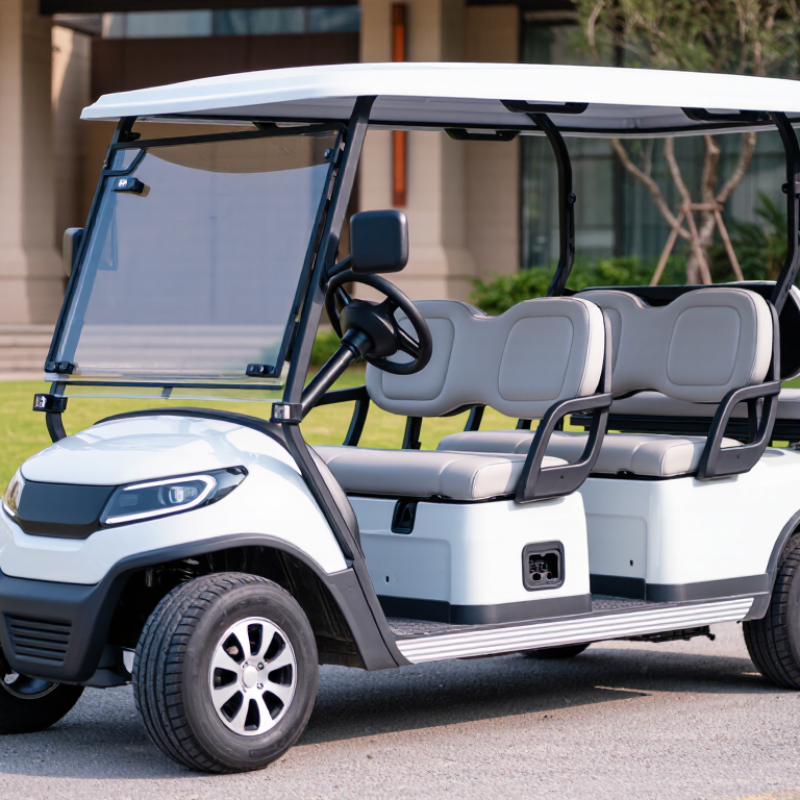
Two-Passenger Electric Golf Carts: 48–72 V Systems and 3–8 kW Motors
China Best 2-Passenger Electric Golf Cart Supplier?
Two-passenger electric golf carts usually use 48–72 V electrical systems and 3–8 kW motors. A 48 V, 3 kW motor draws about 63 amps before losses. A 72 V, 8 kW motor needs roughly 111 amps. Higher voltage can reduce cable heating and improve hill performance, but battery quality still controls real-world results.
The International Energy Agency reported that average lithium-ion battery prices fell to 139 dollars per kWh in 2023. This trend can support more competitive electric cart pricing. However, buyers should examine usable capacity, not only battery voltage. A 72 V battery with poor thermal control may perform worse than a well-tested 48 V pack. Check gradeability, payload, controller limits, braking distance, and charging time under realistic conditions.
Testing matters more than catalogue language.
A practical supplier should provide motor power curves, battery cycle data, and inspection records. Ask for tests with two adults, cargo, and a continuous incline. A 3 kW setup may suit flat resorts and private roads. An 8 kW system offers stronger acceleration, but it can increase tire wear and energy consumption. The U.S. Department of Energy emphasizes that driving conditions strongly affect electric vehicle efficiency. Golf carts are no exception. Small details matter. A supplier may publish peak power instead of continuous power, which can mislead purchasing decisions.
Key Specifications: 25–40 km/h Speed and 60–100 km Driving Range
For buyers comparing the best two-passenger electric golf cart supplier, speed and range deserve practical testing, not attractive brochures.
A 25–40 km/h top speed supports short estate roads and private resort routes. However, the upper figure can reduce stability on uneven ground. ANSI/ITSDF B56.8 remains a useful reference for golf-car design and safety evaluation.
A 60–100 km driving range sounds suitable for daily use.
Real results depend on passenger weight, hills, tire pressure, temperature, and battery age. The U.S. Department of Energy reports that cold temperatures can reduce electric-vehicle range, a concern also relevant to compact electric carts. Ask suppliers for test conditions, battery capacity, payload, and charging time. Range without conditions is weak evidence.
Battery chemistry matters.
A 2024 Grand View Research market analysis identifies lithium-ion batteries as a major growth area in electric golf carts, supported by lower maintenance and useful energy density. Yet lithium-ion does not guarantee 100 km. A practical inspection should check frame welds, braking response, suspension movement, and controller protection.
Short test drives can mislead. Request a loaded route test with two adults, slopes, and repeated stops.
The National Golf Foundation’s 2024 industry report recorded more than 500 million U.S. golf rounds in 2023, showing why reliable fleet operation matters. For private buyers, the best specification may be a stable 30 km/h and a verified 70 km range, rather than maximum numbers.
Battery Comparison: LiFePO₄ Packs Deliver 1,000–2,000 Charge Cycles
Choosing the China best 2-passenger electric golf cart supplier requires more than comparing speed and price. Battery chemistry deserves closer attention. Quality LiFePO₄ packs commonly deliver about 1,000–2,000 full charge cycles under controlled conditions. For a cart used 150 cycles yearly, that could mean roughly seven to thirteen years of cycling capacity. Real service may be shorter.
The IEA Global EV Outlook 2024 reports that LFP batteries represented about 40% of global electric-car battery deployment in 2023. This growth reflects their strong thermal stability, lower cobalt dependence, and practical durability. However, cycle life changes with heat, charging habits, load weight, and discharge depth. The U.S. Department of Energy’s battery research programs also treat temperature control and cycle testing as essential performance measures. A cart climbing wet grass with two passengers works harder than a showroom test suggests. I have seen battery claims look impressive, yet range dropped noticeably after poor winter storage.
Tips: Ask for the usable battery capacity, not only the advertised capacity. Request cycle-test conditions, including temperature and discharge depth. Check whether the battery management system records temperature and cell balance. A 1,500-cycle claim means little without these details. Also inspect charging time, warranty terms, and replacement access. Small omissions matter.
Battery Cycle Life for 2-Passenger Electric Golf Carts
LiFePO₄ battery packs typically provide about 1,000–2,000 charge cycles, exceeding the expected cycle life of common lead-acid and other lithium-ion chemistries. Actual service life depends on depth of discharge, charging practices, temperature, and maintenance.
Typical industry cycle-life ranges are shown for comparison. One cycle represents a complete discharge and recharge equivalent.
Supplier Verification: ISO 9001, CE, UN 38.3, and MSDS Compliance
China Best 2-Passenger Electric Golf Cart Supplier?
Supplier Verification: ISO 9001, CE, UN 38.3, and MSDS Compliance
Choosing a two-passenger electric golf cart requires more than comparing price and pictures. I would verify the supplier’s ISO 9001 certificate, including its validity, scope, and issuing organization. ISO 9001 shows a controlled quality system, but it does not guarantee every cart is safe. Ask for production records, inspection reports, and serial-number traceability. Small details matter.
For European deliveries, request the CE Declaration of Conformity and supporting test documents. CE marking should match the exact cart model, charger, and battery system. For lithium batteries, UN 38.3 test evidence is essential for transport compliance. Request the current MSDS, now commonly called SDS, with battery chemistry, hazards, handling, and emergency procedures clearly listed. Documents should use consistent model numbers. A mismatch deserves questions.
Tips: Ask for editable document details, not only screenshots. Confirm certificate numbers independently when possible. Request a sample inspection video showing brake testing, charging, lights, and seat belts. I once treated a certificate copy as enough. That was a mistake. A supplier may have valid paperwork for another model. Compare every document with the actual configuration, battery pack, and charger before ordering. Also check whether an independent pre-shipment inspection is available. It adds cost, but it can expose wiring, labeling, or packaging problems before dispatch.
China Supplier Selection: MOQ, Warranty, Customization, and After-Sales Support
China Best 2-Passenger Electric Golf Cart Supplier?
For a two-passenger electric golf cart, MOQ should match your sales forecast. A trial order of 5–20 units can test battery range, hill performance, and assembly consistency. Large MOQs may reduce unit cost, but they can trap cash in slow-moving inventory. IEA’s Global EV Outlook 2024 recorded almost 14 million electric car sales in 2023. That growth increases battery demand and makes cell traceability more important. Ask for battery certificates, charger specifications, and production inspection records.
Warranty terms need practical details. Confirm coverage for the battery, motor, controller, charger, frame, and consumable parts. A clear period is not enough. Check claim evidence, labor coverage, shipping responsibility, and replacement timing. Customization should include measurable options, such as 48V or 72V systems, seat materials, roof design, color, tires, and fleet tracking. Grand View Research identifies fleet, resort, and rental use as important golf cart market segments. These users need durable configurations, not decorative changes.
After-sales support often decides the real purchase cost. Require wiring diagrams, fault codes, spare-parts lists, and remote troubleshooting procedures. A supplier should name response times. For example, technical replies within 24 hours and urgent parts dispatch within three working days. That sounds reasonable. It still needs proof. Before signing, request a sample unit and a video call with the service team. My caution is simple: low price and low MOQ can hide weak support. A written service process matters more than friendly promises.
FAQS
Most models use 48–72 volts and 3–8 kilowatts. A 3 kW system suits flat roads and light loads. An 8 kW motor handles hills better but uses more energy. Real performance depends on battery quality.
No. A 72-volt battery can perform poorly with weak thermal control. A tested 48-volt pack may deliver steadier results. Check usable capacity, controller limits, and hill performance.
A 25–40 km/h top speed covers private roads and resort routes. Around 30 km/h may offer better stability on uneven ground. Higher speed can increase stopping distance and tire wear. Maximum speed is not everything.
Sometimes, but test conditions matter greatly. Passenger weight, slopes, tire pressure, temperature, and battery age affect range. Ask for a loaded test with two adults. Range without conditions is weak evidence.
Check usable energy, chemistry, cycle data, thermal control, and charging time. Do not compare voltage alone. A battery may show strong figures when new, then weaken sooner than expected. I would request recent test records.
Request motor power curves and battery cycle data. Ask for brake tests, charging tests, and inspection records. A useful route includes two adults, cargo, slopes, and repeated stops. Short drives can mislead.
Request a valid quality-management certificate with its scope and issuing organization. For European deliveries, check the conformity declaration for the exact model. For lithium batteries, request transport test evidence and a current safety data sheet. Document mismatches deserve questions.
Compare model numbers, battery specifications, charger details, and serial numbers. Do not trust screenshots alone. Ask for production records and an inspection video. I once treated a certificate copy as sufficient. That was a mistake.
Conclusion
Choosing the right 2-passenger electric golf cart requires careful evaluation of both performance and supplier reliability. Most models use 48–72 V electrical systems with motors rated between 3 and 8 kW, offering practical speeds of approximately 25–40 km/h and a driving range of 60–100 km, depending on load, terrain, and battery capacity. LiFePO₄ battery packs are often preferred because they can provide roughly 1,000–2,000 charge cycles when properly maintained, helping reduce long-term operating costs.
When selecting a China-based supplier, buyers should verify ISO 9001 quality management and request relevant CE, UN 38.3, and MSDS documentation for the vehicle and battery system. MOQ, warranty coverage, customization options, spare-parts availability, delivery capability, and after-sales support are also important considerations. A dependable supplier should communicate clearly, provide consistent product specifications, support sample testing, and offer practical assistance throughout the purchasing and service process.