The global golf cart market is moving beyond traditional course transport. Grand View Research identifies electrification, resort development, and low-speed urban mobility as major growth drivers. Its market analysis also indicates steady expansion through the decade, although estimates vary across research firms. No single forecast tells the whole story.
For global buyers, a custom electric golf cart must match its working environment. A six-seat model may suit a resort shuttle, while a compact two-seat cart fits gated communities or campus routes. Lithium-ion batteries can reduce weight and simplify daily charging. However, battery range changes with passenger load, slope, temperature, tire pressure, and driving habits. Small details matter.
The R&A’s Global Golf Participation Report shows golf serving millions of players across many countries and facility types. That broad user base creates different expectations for comfort, safety, service, and appearance. A cart used beside a coastal resort faces salt air. A vehicle used on a hilly property needs stronger braking and controlled torque. Buyers should also examine charger compatibility, warranty coverage, spare-parts access, and local service capability.
This guide evaluates the 2026 top custom electric golf cart options through practical, global criteria. It considers configuration flexibility, battery technology, passenger protection, operating cost, and supplier reliability. A polished brochure is not enough. Real performance can disappoint. Transparent testing and honest specifications matter more. The best choice is not always the fastest cart, but the one that remains dependable after repeated charging, uneven paths, and changing weather.
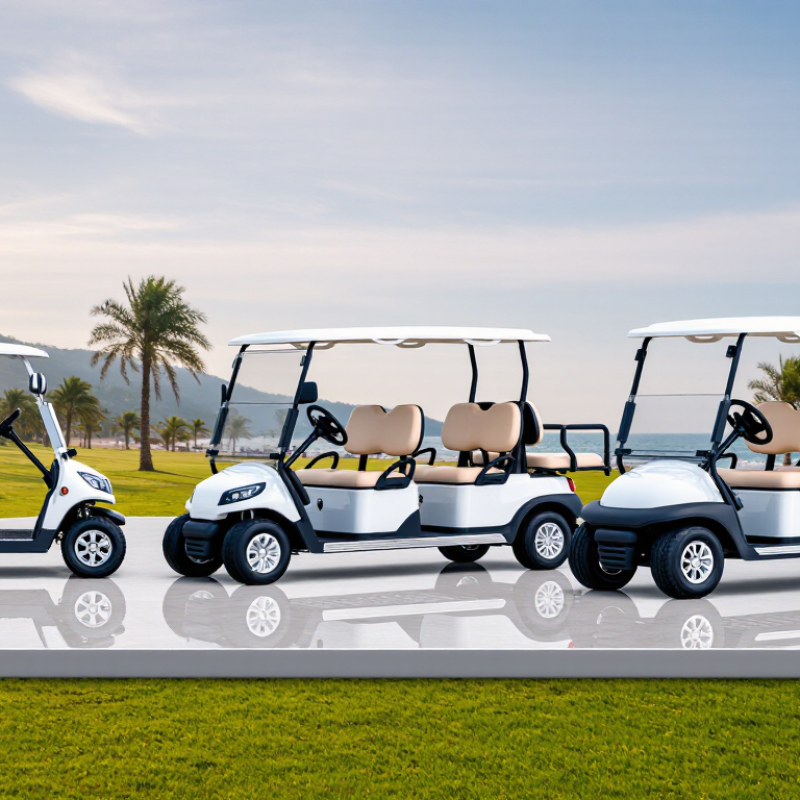
Electric Golf Cart Market Trends and Buyer Needs in 2026
In 2026, global buyers are choosing electric golf carts for resorts, campuses, communities, farms, and short urban trips. Industry estimates vary, but Fortune Business Insights values the global golf cart market at about USD 1.86 billion in 2023. Its report projects steady growth through 2032. MarketsandMarkets also expects strong expansion, driven by lithium batteries, quieter motors, and fleet electrification. The numbers differ. That difference deserves attention before making investment decisions.
Battery life now matters more than decorative customization. A practical cart should provide clear range data, stable braking, weather protection, and accessible replacement parts. Lithium systems reduce weight and charging time, but they can increase purchase costs. The International Energy Agency reported that global electric car sales exceeded 17 million in 2024. Golf carts are smaller, yet buyers increasingly expect similar charging convenience. A 3.3 kW charger may suit overnight use, while busy properties may need faster charging infrastructure. Local speed, lighting, and road-use rules still control where the vehicle can operate.
Tips:
Ask for tested range, not advertising range. Check battery warranty terms and charging compatibility. Measure doorway and storage clearance before ordering. Request service response times in writing. Custom seats and colors look attractive, but they rarely improve daily productivity. A cart with four seats, strong suspension, and sealed storage may serve better than a heavily styled model. Buyer needs vary by climate, terrain, and passenger load, so one global specification cannot fit every market.
Key Features of Top Custom Electric Golf Carts
Key Features of Top Custom Electric Golf Carts
Top custom electric golf carts combine practical engineering with personal design. Buyers should examine battery capacity, charging time, motor output, and expected driving range. A lithium battery can reduce weight and support faster charging, while lead-acid systems may suit simpler budgets. Range changes with hills, passenger weight, temperature, and driving habits. Real testing matters more than attractive specifications.
Strong carts use reinforced frames, responsive brakes, durable suspension, and reliable lighting. Adjustable seats improve comfort during long property tours or resort operations. Weather-resistant wiring helps protect electrical parts from rain and dust. Buyers should also check tire size, ground clearance, turning radius, and storage space. Small details matter. A deep rear basket can carry tools, groceries, or folded equipment.
Customization should support the vehicle’s purpose, not only its appearance. Fleet operators may need fleet numbering, protective roofs, utility beds, or lockable compartments. Private users might prefer quiet cabins, flexible seating, and improved dashboard controls. Safety belts, mirrors, warning signals, and suitable speed settings deserve careful attention. Local road rules and import requirements must also be verified before purchase. We have seen impressive carts lose value because replacement parts were difficult to source. That weakness is easy to overlook. A dependable supplier should provide clear specifications, maintenance guidance, and responsive after-sales support. Even the best design needs regular inspections.
Battery, Motor, Range, and Charging Options Explained
2026 Top Custom Electric Golf Cart for Global Buyers
Battery, Motor, Range, and Charging Options Explained
A custom electric golf cart starts with the battery, not the paint color. Lithium-ion packs usually deliver lower weight and steadier voltage than lead-acid batteries. BloombergNEF’s 2024 Lithium-Ion Battery Price Survey reported an average pack price of 115 US dollars per kWh, showing why larger packs are becoming more practical. For everyday routes, a 5–8 kWh battery can support roughly 40–80 kilometers, depending on load, hills, tires, and temperature. Real range is often lower than the brochure figure.
Motor choice changes the driving feel. An AC motor provides smooth torque on ramps and can reduce maintenance because it uses fewer wearing components. A 48-volt system suits light urban movement, while 72 volts offers stronger hill performance and faster acceleration. However, more power can increase energy use and tire wear. That trade-off is easy to miss.
Charging should match the buyer’s location and schedule. A 1.5–3 kW onboard charger may need four to eight hours for a full charge. Overnight charging is usually gentler than repeated fast charging. The International Energy Agency reported that global electric-car sales exceeded 17 million in 2024, but golf-cart conditions differ greatly from passenger vehicles. Buyers should request independent range testing, battery-cycle data, and charging compatibility. Test the cart with two passengers, a full load, and a real slope. Controlled testing can look impressive. Daily use is messier.
2026 Top Custom Electric Golf Cart for Global Buyers - Battery, Motor, Range, and Charging Options Explained
Specification guide for common custom electric golf-cart configurations. Figures are practical engineering ranges for new builds and should be confirmed with the final supplier configuration.
| Configuration |
Battery Options |
Motor & Drive |
Typical Range* |
Charging Time |
Seating & Payload |
Best Use |
| Compact 2-Seat |
48 V lead-acid, 150–170 Ah
or 48 V lithium-ion, 100–105 Ah |
5–6 kW AC motor
Single-speed transaxle |
35–55 km
22–34 mi |
Lead-acid: 7–10 h
Lithium: 4–7 h |
2 occupants
350–450 kg payload |
Private communities, resorts, short-distance transport |
| 4-Seat Standard |
48 V lead-acid, 180–225 Ah
or 48 V lithium-ion, 105–150 Ah |
5–8 kW AC motor
Regenerative braking |
45–75 km
28–47 mi |
Lead-acid: 8–12 h
Lithium: 4–8 h |
4 occupants
450–600 kg payload |
Residential areas, hotels, campuses and golf facilities |
| 6-Seat Extended |
48 V lithium-ion, 150–200 Ah
Optional 72 V, 150 Ah pack |
8–12 kW AC motor
Heavy-duty controller |
55–90 km
34–56 mi |
Lithium: 5–9 h
With compatible fast charger: about 3–5 h |
6 occupants
550–750 kg payload |
Large properties, tourism and passenger shuttle service |
| Utility Cargo |
48 V lithium-ion, 150–200 Ah
Lead-acid available for lower initial cost |
8–12 kW AC motor
Low-speed torque gearing |
45–80 km
28–50 mi |
Lithium: 5–9 h
Lead-acid: 8–12 h |
2–4 occupants
600–900 kg total payload |
Maintenance, landscaping, farms and light material handling |
| Off-Road 4x4 |
72 V lithium-ion, 150–200 Ah
Battery-management system required |
12–20 kW dual-motor system
Selectable 2WD/4WD |
50–85 km
31–53 mi |
6–10 h with standard charging
About 4–6 h with suitable higher-output charging |
2–6 occupants
500–800 kg payload |
Uneven terrain, plantations, large estates and outdoor operations |
| Street-Oriented LSV |
72 V lithium-ion, 150–225 Ah
Integrated BMS and onboard charger |
10–20 kW AC motor
Hydraulic or regenerative braking |
70–120 km
43–75 mi |
6–10 h on a standard AC supply
Approximately 4–7 h with higher-output charging |
2–6 occupants
500–750 kg payload |
Low-speed public roads where local approval and equipment requirements are met |
| Premium Long-Range |
72 V lithium-ion, 200–300 Ah
Higher energy capacity for extended daily operation |
15–25 kW AC motor
Advanced controller and thermal protection |
90–150 km
56–93 mi |
8–14 h with standard charging
About 5–9 h with higher-output charging |
4–6 occupants
600–850 kg payload |
Large resorts, tour operations and high-utilization commercial fleets |
Buyer Notes
*Range estimates assume a fully charged battery, moderate speed, level terrain, normal tire pressure and moderate ambient temperature. Passenger weight, hills, soft ground, wind, accessories and frequent acceleration can reduce range substantially.
Lithium-ion packs generally provide lower weight, more usable capacity and faster charging than lead-acid packs. Confirm cell chemistry, battery capacity in kWh, battery warranty, charger input voltage and replacement-battery availability before ordering.
Top speed, lighting, mirrors, seat belts, braking equipment, dimensions and road-registration requirements vary by country and vehicle category. Local compliance should be verified before importing or operating the vehicle on public roads.
Customization Choices for Different Global Buyer Groups
2026 Top Custom Electric Golf Cart for Global Buyers
Customization should begin with the buyer’s daily environment, not a fashionable accessory list. Resort operators often need quiet vehicles, washable seats, luggage racks, and comfortable rear-facing benches. Private property owners may prefer stronger suspension, enclosed storage, and weather-resistant lighting. Golf facilities usually prioritize smooth handling, precise braking, and enough range for continuous course operations.
Climate changes the specification. Hot coastal areas require corrosion-resistant hardware and durable upholstery. Cold regions may need insulated battery compartments and reliable cabin heating. Buyers should also confirm charging compatibility, steering position, dashboard language, and local safety requirements. A larger battery is not always better. It can increase weight, charging time, and maintenance demands. That detail is easy to overlook.
Tips: Match the cart to its route, load, and climate. Test it with real passengers and cargo before ordering. Ask for battery data, component specifications, service procedures, and warranty terms in writing. Short tests can hide problems. A ramp, uneven path, or wet surface may reveal more than a showroom drive. Leave room for small adjustments after delivery, because the first configuration is rarely perfect. Reliable suppliers should explain these limitations clearly and provide practical inspection records.
Safety, Regulations, Pricing, and Export Considerations
2026 Top Custom Electric Golf Cart for Global Buyers
A top custom electric golf cart must satisfy safety rules before adding luxury features. In the United States, FMVSS 500 limits low-speed vehicles to 25 mph and requires specific equipment. However, a private-course cart may not qualify as a road vehicle. Local classification matters. UNECE Regulation No. 100 also addresses rechargeable electric vehicle battery safety. Exporters should verify battery protection, braking performance, lighting, seat belts, and charger compatibility.
Pricing needs more than a factory quotation. Global Market Insights projects continued growth in the golf cart market through 2032, with demand supported by resorts, campuses, and urban mobility. Yet the lowest unit price can become expensive after ocean freight, insurance, import duty, certification, and inland delivery. Lithium batteries may also require UN 38.3 test evidence and compliant transport packaging. IATA Dangerous Goods Regulations apply to air shipments, while maritime shipments follow separate dangerous-goods procedures. A small mistake can delay a container.
Tips: Request a complete landed-cost worksheet. Ask for the battery test summary, charger voltage, warranty terms, and spare-parts list. Confirm the correct HS code with a customs broker. Check whether the destination requires type approval. Inspect one sample before mass production. I would not trust glossy specifications alone; real payload, hills, rain, and charging conditions often reveal uncomfortable gaps. Pricing assumptions also deserve a second review.
2026 Top Custom Electric Golf Cart for Global Buyers
Safety, regulations, pricing, and export considerations for unbranded electric golf cart configurations.
Pricing
The chart shows broad planning ranges for new, unbranded carts before destination duties, inland delivery, insurance, and local registration costs.
Safety
Confirm braking performance, lighting, seat belts, battery protection, charger certification, and rollover or occupant-protection requirements for the destination market.
Export compliance
Lithium battery shipments require correct dangerous-goods classification, UN 38.3 test documentation, compliant packaging, and carrier approval. A 48 V × 100 Ah battery pack has approximately 4,800 Wh and normally exceeds passenger-aircraft battery limits.
Indicative market-planning ranges only, not quotations or legal advice. Road legality, speed limits, import duties, tax treatment, labeling, and certification vary by country and sometimes by region.
FAQS
Check tested range, braking stability, weather protection, and replacement-part access. Market forecasts differ, so investment claims deserve careful review.
Lithium-ion batteries usually weigh less and provide steadier voltage. They may charge faster, but their purchase price can be higher. Real life varies.
A 5–8 kWh battery may support roughly 40–80 kilometers. Hills, passengers, tires, temperature, and cargo can reduce that distance.
Request independent range testing and battery-cycle data. Test two passengers, a full load, and a real slope. Brochure figures can look optimistic.
A 1.5–3 kW charger may need four to eight hours. Overnight charging often suits routine use and may be gentler on the battery.
Not necessarily. A 72-volt system can climb hills more strongly, but it may increase energy use and tire wear. More power has costs.
Custom colors and seats mainly improve appearance. Four seats, firm suspension, and sealed storage may provide greater practical value.
Measure doorways, storage areas, turning space, and charging locations. A cart that cannot enter the garage is a costly mistake.
Check speed limits, lighting requirements, road-access rules, and operating zones. Local regulations decide where the vehicle can legally travel. Fit matters.
Conclusion
In 2026, the global market for electric golf carts is shifting toward smarter, cleaner, and more adaptable transportation solutions. Buyers increasingly seek a custom electric golf cart that can serve resorts, residential communities, tourism sites, campuses, farms, and commercial areas. Top models are expected to combine efficient performance, comfortable seating, durable frames, intuitive controls, LED lighting, weather protection, storage space, and optional technology features. Battery type, motor power, driving range, charging time, and charging compatibility remain essential factors when comparing different configurations.
Customization allows buyers to select seating layouts, colors, body styles, tires, enclosures, cargo features, and accessories according to local needs. Fleet operators may prioritize durability and easy maintenance, while private users may focus on comfort, appearance, and extended range. Before purchase, buyers should review safety equipment, local operating rules, certification requirements, import documentation, warranty coverage, spare parts availability, shipping conditions, and total ownership costs. Careful evaluation of pricing, battery lifespan, after-sales support, and export regulations can help global buyers choose a reliable solution that matches both practical requirements and regional compliance standards.